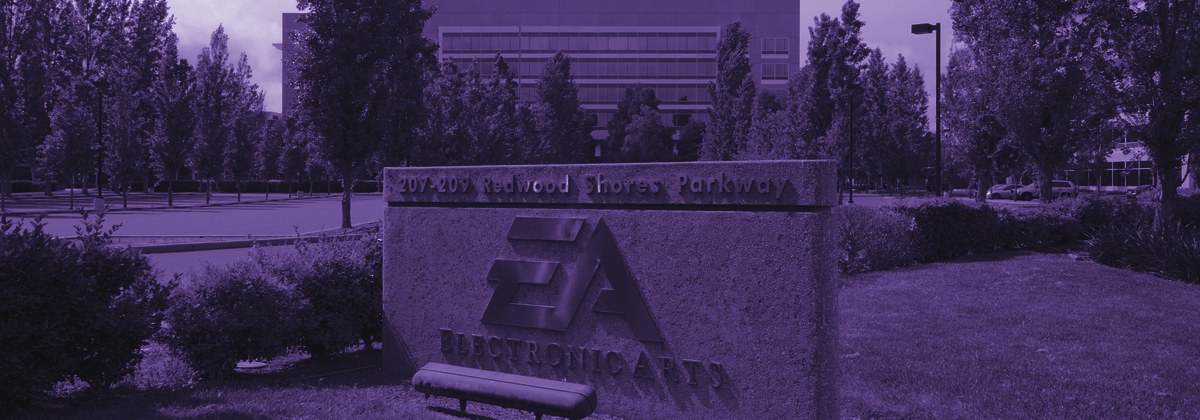
The Public Investment Fund has closed the largest acquisition it has ever led. Together with Silver Lake and Affinity Partners, the sovereign fund completed the purchase of Electronic Arts this week at 210 dollars a share in cash, a transaction valuing the publisher at roughly 55 billion dollars. EA’s stock has stopped trading on Nasdaq after more than three decades as a public company. For the Kingdom, the change is categorical: the state that spent four years funding a domestic games industry now owns one of the companies that defines the global one.
The confirmed sequence is brisk by the standards of deals this size. The consortium announced the agreement on September 29 last year, EA stockholders approved it on December 22, and closing came on August 4, within the window the parties set at the outset. Electronic Arts remains headquartered in Redwood City, California, and Andrew Wilson stays on as chairman and chief executive. The publisher’s catalog includes EA Sports FC, Madden NFL, The Sims, Battlefield and Apex Legends, franchises that sell every year to an audience measured in the hundreds of millions.
PIF did not arrive as a stranger. The fund had held a minority position in EA for more than five years, and the takeover converts that patient stake into control alongside two partners it has invested with before. “Entertainment and sports are key areas of strategic focus for PIF, and are among the fastest growing and evolving sectors,” said Turqi Alnowaiser, the fund’s deputy governor and head of international investments. Wilson framed the new ownership as fuel: “Together, we’ll invest boldly, accelerate innovation, and build the next generation of games and experiences for hundreds of millions of players.”
What Control Buys
The strategic logic starts with what EA sells. Annual sports titles and live-service games produce the kind of recurring revenue that most entertainment businesses spend decades chasing, renewed each season by league calendars rather than by marketing budgets. That revenue profile is what made a 55 billion dollar price defensible to three sophisticated buyers. It also pairs neatly with the Kingdom’s physical sports investments. The country that will host the 2034 FIFA World Cup now owns the company that makes the licensed football game most of the world plays. The digital layer of the sport and its biggest coming stage sit, for the first time, under connected ownership.
Control also changes what the asset can be asked to do. As a private company, EA no longer answers to a quarterly earnings cycle, which suits an owner whose stated horizons run to 2030 and beyond. The National Gaming and Esports Strategy, launched in 2022, targets 250 gaming companies in the Kingdom, 39,000 jobs and a 50 billion riyal contribution to GDP by the end of the decade. A publisher in the portfolio does not deliver those numbers by itself; EA’s studios and talent remain where they are today. The test of the acquisition, on the strategy’s own terms, is whether ownership becomes a channel for capability: publishing operations, development work and esports activity that exist inside the Kingdom rather than merely alongside it. PIF’s Savvy Games Group, which already owns the mobile publisher Scopely and the esports operator ESL FACEIT Group, gives the fund an existing structure to connect that work to.
The neutral reading of the risk is also worth stating plainly. Game development is a hits business with long cycles and expensive failures, and private ownership concentrates that exposure rather than diluting it. The consortium is betting that EA’s franchises are durable enough to carry the leverage a deal this size requires. Public markets priced that bet daily; from now on, the owners will mark it themselves.
The markers to watch are concrete. How the consortium divides governance among three partners will shape how Riyadh’s priorities reach Redwood City. Any EA presence in the Kingdom, a publishing office, a studio, a competitive circuit for its sports titles, would be the first evidence that the jobs target has found its largest lever. And the run-up to 2034 will show whether a football game and a football tournament under related ownership are treated as one asset or two. The purchase settled in ten months. What it was for will take longer to read.