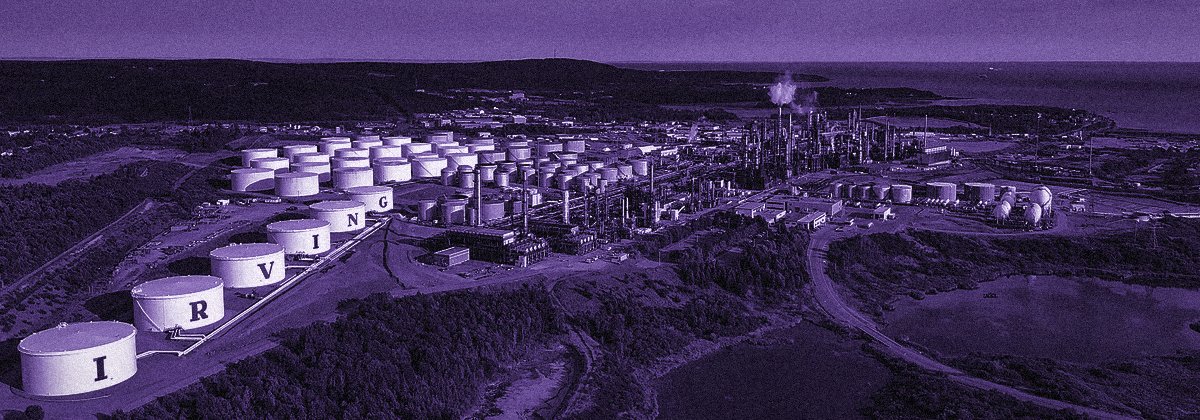
Saudi Arabia’s listed petrochemical producers spent the first half of 2026 losing money at half of last year’s pace. Combined net losses across nine companies on the Saudi Exchange came to SR1.7 billion ($452.8 million), against SR3.4 billion in the first half of 2025, according to a survey of published results by Asharq Al-Awsat. In a global industry still working through surplus capacity, a halved loss is what the early stage of a cycle turn looks like. The composition of the improvement says how much of the turn is operational, and the answer is: less than the headline.
Four of the nine earned money. SABIC Agri-Nutrients remained the sector’s anchor with SR1.6 billion in profit, even after a 21.4 percent decline from a year earlier. Yansab multiplied its profit more than four times to SR270 million. Saudi Industrial Investment Group earned SR194 million, a fivefold increase, and Alujain also finished in profit. The losses concentrated in five names: Saudi Kayan at SR1.29 billion, Tasnee at SR889.1 million, SABIC at SR820 million, with Advanced Petrochemical and Sipchem also in the red.
SABIC accounts for most of the sector’s headline improvement, its loss narrowing from SR4.07 billion a year earlier. The composition matters here. Mohamed Hamdy Omar, chief executive of the financial consultancy G. World, notes that the improvement reflects the non-recurrence of provisions and impairment charges rather than an equivalent recovery in underlying operations. Last year’s ledger carried heavy one-time charges; this year’s does not. The accounting is cleaner. The verdict on the plants themselves is still open.
Where the Cycle Sits
The split across the nine follows product lines more than management choices. Agri-Nutrients earns through the trough because fertilizer moves on crop economics and food demand, a cycle with little connection to plastics. The commodity chemical producers, Kayan and Tasnee foremost, sell into a global market that added too much capacity, much of it in Asia, and that continues to price product below what older plants need to cover their costs. Saudi producers retain a feedstock advantage, but the survey points to higher average input costs and sales volumes lost to supply-chain disruption in the half, so some of that advantage was spent on freight and logistics rather than margin.
A sector losing at half the pace has choices it did not have a year ago. Restructuring conducted under pressure tends to sell what is sellable; restructuring conducted with a narrowing loss can be sequenced, and SABIC’s ongoing portfolio review is the case to watch. The direction of the loss line also matters for the sector’s owners, given how much of it sits inside the state’s wider industrial holdings, because every riyal of narrowed loss is a riyal that does not need to be justified against the Kingdom’s other industrial priorities.
Omar expects a gradual and uneven recovery in the second half, with global demand, feedstock costs, excess capacity and shipping conditions all still in play. The number to watch in third-quarter filings is volume. If sales tonnage recovers while losses keep narrowing, the improvement will have moved from the accounting ledger to the plant gate. If the loss narrows on flat volumes, the sector is still waiting for its market to come back, and the difference between those two readings is worth more than the headline figure that arrives with it.