The General Authority for Statistics published two price readings this week that appear to describe different economies. Consumer inflation held at 1.8 percent in July, unchanged for a third consecutive month and the lowest rate in the Gulf. Producer prices, measured at the factory gate, rose 8.5 percent in June. For households the Kingdom is a stable-price economy; for industry, input and output markets are moving fast. Both readings are accurate, and the distance between them shows where Saudi price management actually operates.
The consumer index moved 0.2 percent between June and July. Housing, water, electricity and fuel, the heaviest group in the basket, rose 4.2 percent year on year, with housing rents up 4.3 percent. Food and beverages added 1.5 percent, transport 1.4 percent, personal care 2.9 percent and recreation 2.4 percent. Clothing and footwear fell 0.4 percent. Around the Gulf, every neighbor is running hotter: Kuwait recorded 2.19 percent in June, Qatar 2.21 percent, Bahrain 2.3 percent and Oman 2.8 percent.
The producer index tells the industrial story. The 8.5 percent annual rise in June, up from 7.5 percent in May, was led by manufacturing at 9 percent, within which refined petroleum products rose 13.2 percent and chemicals 14.4 percent. Basic metals gained 8.4 percent and food products 4.6 percent. The wholesale price index, a third gauge sitting between factory and shelf, rose 5 percent in July on the same chemical and metals pressure.
Why the Gap Does Not Close
In most economies a 6.7-point spread between producer and consumer inflation would be a queue of price increases waiting to happen. In Saudi Arabia the spread is structural, for three reasons. Domestic fuel and utility prices are administered, which caps the channel through which energy costs normally reach households. The riyal's dollar peg imports world prices for tradable goods, and those prices are soft; falling clothing prices are what retail competition on imported goods looks like. And the categories driving the producer index, refined products and chemicals, are export industries whose prices are set in global markets. Their inflation lands as revenue in Jubail and Yanbu, not as costs at Riyadh checkouts.
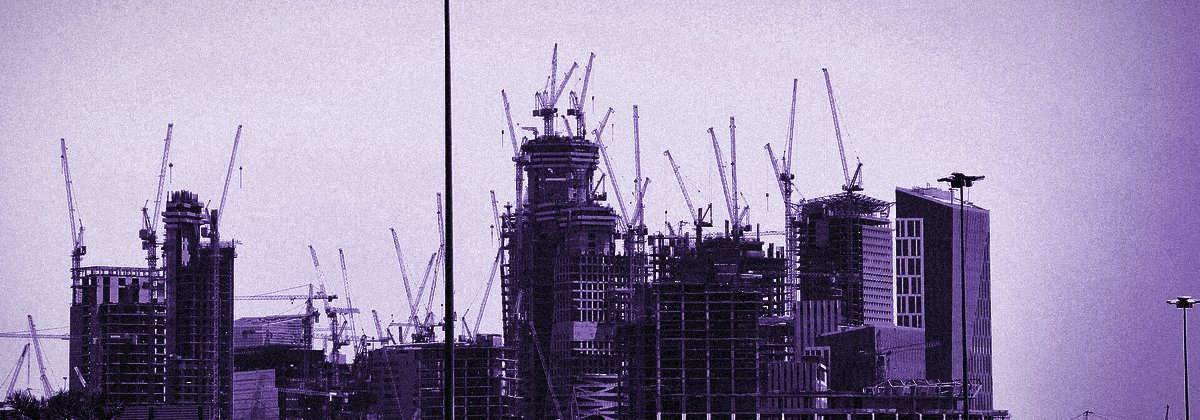
The exception is housing. Rent is the one large consumer category priced entirely by domestic demand, and at 4.3 percent it is doing most of the work in the headline number. The cause is not obscure: the capital is absorbing the workforce of the project decade, from contracting engineers to bank headquarters staff, faster than new units are handed over. Rent is where the construction boom reaches household budgets directly, which makes the pace of housing delivery a consumer-price question as much as a real-estate one.
The anchor has a policy value. Because the peg ties the Saudi Central Bank to American interest rates, the Kingdom cannot raise rates against its own inflation; the consumer index has to behave on its own. An investment cycle of the current size, with more than SR3 trillion of projects expected to reach the market over three years, would in most places be generating exactly the overheating the July data does not show. Stable shelf prices keep wage demands contained, keep long-dated contracts priceable, and spare the state from choosing between the peg and price stability. The International Monetary Fund expects the year to average about 2.2 percent, which would extend the same pattern.
The figures to watch sit in the autumn releases: whether chemicals and metals inflation at the factory gate begins to surface in building-material and maintenance costs, and whether the rent curve bends as Riyadh's new supply, from the northern districts to the metro corridors, starts handing over keys.