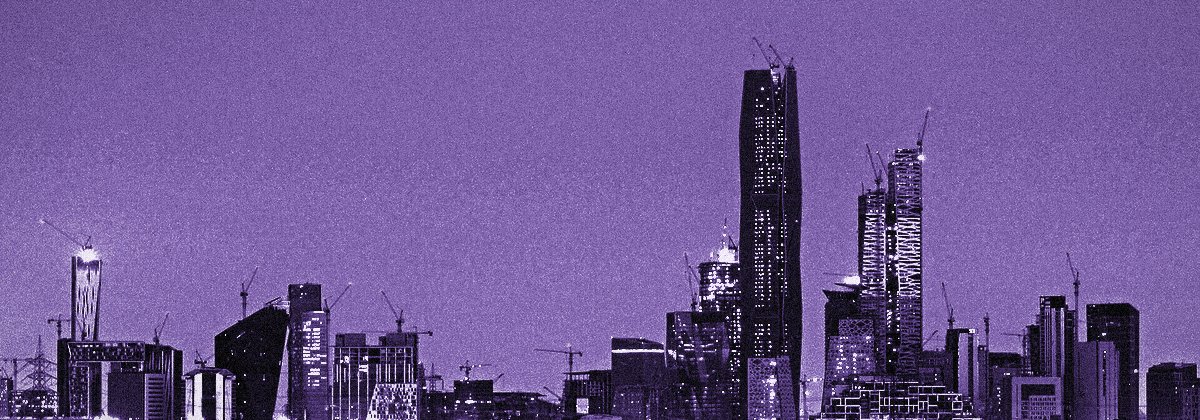
Riyadh has absorbed new banks, a headquarters program and a technology district announcement without much visible strain. The place the pressure shows is the office floor. CBRE’s review of the second quarter puts prime office rents in the capital at SR3,320 ($887) per square meter a year, up 3 percent in three months, with Grade A buildings effectively full. For a company required to be in Riyadh, the operative question has shifted from what space costs to when space arrives.
The arithmetic behind the squeeze is short. The capital’s office stock exceeds 6 million square meters, roughly a third of it Grade A. This year’s delivery pipeline adds about 600,000 square meters, of which some 200,000 are Grade A, and single projects show how quickly that is spoken for: Boulevard Business Park’s 60,000 square meters arrived into a waiting market. Against that pipeline stand more than 780 companies holding regional headquarters licenses by CBRE’s count, each committed to a Riyadh address as a condition of government business, alongside the ministries, authorities and family groups that were already expanding. Demand here is contractual. Supply is architectural. One moves faster than the other.
What has changed in the past year is the market’s answer. Developers have begun treating flexible workspace as structure rather than amenity. Rafal Real Estate now allocates 15 to 20 percent of gross leasable area in its projects to flexible workspace operators, and its chief executive, Elias Abou Samra, makes the case in capacity terms: a building running 40 percent flexible space, he says, "can host 1.5 times more companies." Khaled Mohei El-Din of the Edge Innovation Center describes flexible space as now core to corporate real estate strategy in the Kingdom, not a stopgap for startups.
The logic is the logic of scarcity. A serviced floor lets an incoming headquarters land with twenty desks this quarter instead of waiting for two thousand square meters in 2028, and lets the landlord sell the same space repeatedly, at short tenor and higher rates per meter. Abou Samra dates the shift on the demand side: five years ago Riyadh office demand was led by government and by local firms adding staff at double digits; the entrants now are international, arriving in small teams with mandates to scale. Flexible allocation converts a fixed stock into elastic capacity. It is the same answer the industrial market reached when factory space in the main cities passed 90 percent occupancy: when new walls cannot come faster, use the existing ones harder.
The squeeze stands out against the market next door. In the same quarter, CBRE recorded residential transaction values down 26.9 percent from a year earlier at SR37.67 billion, villa values down 9.7 percent, and buyers moving toward apartments as the Real Estate Development Fund rolled out subsidized financing for first-time purchases. Housing is repricing toward its buyers at the same time offices are repricing toward their tenants. Where work happens is, for now, the scarcer commodity in Riyadh than where people live.
The 2026 pipeline is already known and already thin, so the variables that matter sit further out: whether the towers scheduled for the back half of the decade deliver on time, whether the 15 to 20 percent flexible allocation becomes a design standard in new projects, and whether rent growth holds its quarterly pace into 2027. The Royal Commission for Riyadh City spent last week describing a district meant to attract international technology talent. The people it recruits will need desks, and on current numbers the desks are the harder part.