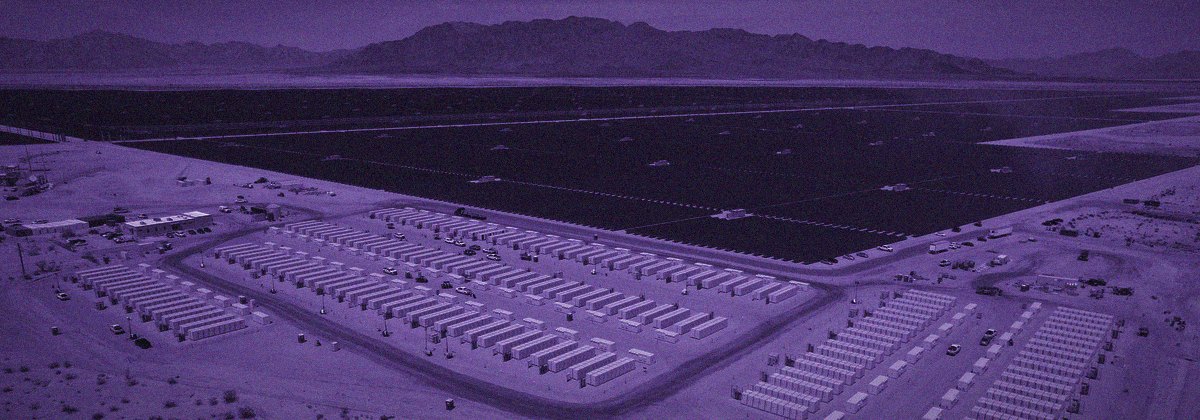
The question hanging over the Kingdom’s 2030 electricity plan has shifted from whether it is ambitious to whether the contractors stay on schedule. Omar Al-Hassan, CEO of ACWA Saudi, gave the congress week’s clearest measure of where delivery stands: a renewables portfolio of 30 gigawatts, 7.5 of them operating and 22.5 under construction, with the building capacity due online through 2027 and 2028. Three quarters of the portfolio is steel and cable rather than paper, and the operating base is set to quadruple inside about two years.
That cadence is what the mix target requires. The Kingdom plans an electricity generation mix of roughly half natural gas and half renewables by 2030, retiring the liquid fuels that still burn in older plants. The constraint has moved down the project pipeline: equity and debt have been committed and tenders awarded, and what remains between now and 2030 is commissioning, the unglamorous sequence of grid connections, performance tests and handovers. Al-Hassan’s 2027 and 2028 window is where that sequence either compounds or slips.
Speaking to Arab News on the congress sidelines, Al-Hassan framed the mix as an exercise in using everything the Kingdom holds. “Gas and oil will always remain there and will have to be there. But the energy mix is what matters,” he said. The logic is economic before it is environmental: every barrel displaced from a power station is a barrel available for export or refining, and solar power at Saudi auction prices has repeatedly set the low end of world benchmarks. The mix is an arbitrage, run at grid scale.
On the NEOM green hydrogen plant, Al-Hassan put completion at 96 to 97 percent, with first green ammonia shipments expected in 2027 from a facility designed for 1.2 million tonnes a year. The figure matches what the National Development Fund’s governor told the same congress earlier in the week, when he reported the project 96 percent complete with commercial operations set for 2027. Developer and development financier are reading the same gauge, which, for a first-of-kind plant at this scale, is itself information.
Storage is the newer layer. ACWA has been awarded three battery storage projects, which Al-Hassan said will strengthen the grid and give the system operator flexibility. Batteries are what make a half-renewable mix operable: they move midday solar into the evening peak and give the Saudi Power Procurement Co., which told the congress this week that about half the national grid is being scaled up at once, a balancing tool other than gas turbines. Capacity figures for the three awards have not been published, and they are the detail worth waiting for.
The quieter number in the interview was a labor figure. Saudization at ACWA’s plants runs at about 70 percent, and the company’s Energy and Water Academy at Rabigh has graduated more than 70,000 professionals across 20 specialized programs, training over 2,000 people a year. Power plants are assets that run for decades, and who operates them decides where those decades of salaries land. The academy numbers say the operating phase of the energy build is being staffed domestically rather than imported.
The congress closed Thursday after five days in which the hosting itself carried the argument that Riyadh intends to manage the energy transition on its own terms. The measures of follow-through are now specific: the 2027 and 2028 commissioning cadence across 22.5 gigawatts, capacity figures for the battery awards, and the Saudi Power Procurement Co.’s next tenders, where the gas half of the fifty-fifty gets bought.