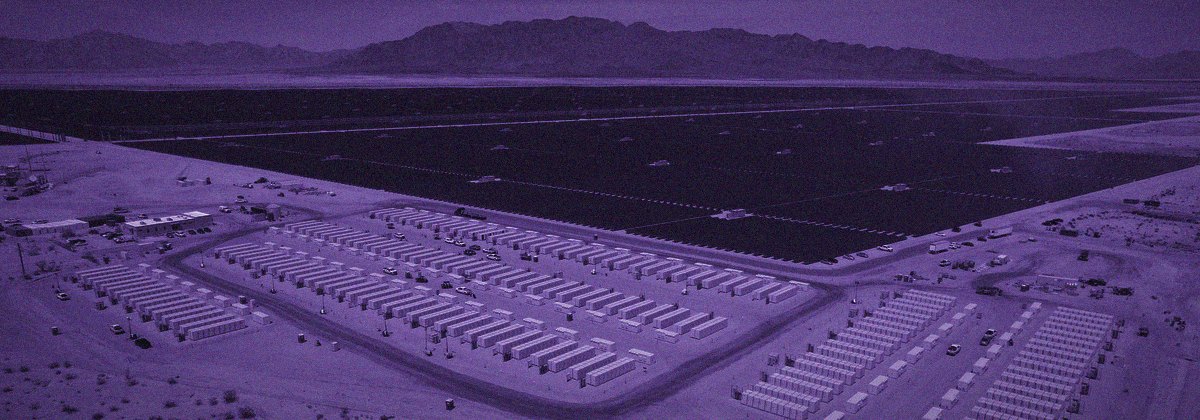
Renewable generating capacity on the Kingdom’s grid has reached 19.3 gigawatts, according to tracking data published this week by the King Abdullah Petroleum Studies and Research Center, a sixty-three-fold increase on the 0.3 gigawatts that were operating at the end of 2020. The level attracts the attention. The trajectory deserves it: annual additions have grown every year since 2021, from 0.4 gigawatts in 2022 to 2.1 in 2023, 3.8 in 2024, 5.7 in 2025, and 7.0 in the first nine months of 2026. This year’s additions alone exceed everything connected before 2025 combined.
The resource did not change in 2022. The procurement machinery did. The years in which the curve was flat were the years in which the Saudi Power Procurement Company’s competitive rounds and the Public Investment Fund’s direct-award track were being designed, tendered, and financed; the years since are those contracts turning into panels on the ground. Solar plants are unusual among power assets in how quickly they convert a signed agreement into delivered electrons, typically two to three years from financial close, so a pipeline assembled between 2019 and 2023 is now surfacing as capacity on a compressed schedule. The curve records the scheduled arrival of decisions made years ago, rather than any sudden acceleration of ambition.
The count is also conservative. It excludes Al Henakiyah 2 and Rabigh 2, two solar projects totaling a further 0.7 gigawatts that are expected to complete before the end of the year, which would put the fleet within reach of 20 gigawatts by December. And the renewables line is only half of the generation build: the same week the tracker updated, the gas-fired Taiba 1 and Qassim 1 plants began initial commercial operations with 2,555 megawatts between them. The power system is being rebuilt from both directions at once, toward a stated mix of roughly half renewables and half gas by 2030.
The economic logic that drives the build is displacement. Every megawatt-hour generated from sunlight frees crude and gas that would otherwise burn in domestic power plants, and those molecules carry higher value as exports or as petrochemical feedstock than as boiler fuel. That arithmetic holds at any oil price, which is why the program has survived every budget cycle since its launch. The National Renewable Energy Program’s stated range of 100 to 130 gigawatts by 2030 is the supply side of that logic, and demand is moving toward the program rather than away from it: data centers, desalination, and an emerging electric-vehicle charging load all add consumption that the fleet is being sized to meet.
Distance to target is the sober part of the story. Nineteen gigawatts is about a fifth of the low end of the 2030 range, which means the additions curve must keep steepening for four more years. The pipeline is sized for that: the 15,000-megawatt tranche the Public Investment Fund, Badeel, and ACWA Power agreed in 2025 remains in development, and procurement rounds continue. Whether construction, grid connection, and financing capacity can process that volume simultaneously is now the operative question, and it is a different question from whether the Kingdom can build solar cheaply. That one has been answered.
The constraint is shifting accordingly, from generating capacity to integration. Solar output peaks at midday; Saudi demand peaks in the evening. The battery-storage agreements signed this year exist to move those megawatt-hours across the gap, and the transmission build has to carry power from the sun-rich interior to coastal load centers. The next phase of this curve will be measured less in gigawatts of panels than in gigawatt-hours of storage and kilometers of line.
Two markers sit close ahead: whether Al Henakiyah 2 and Rabigh 2 close out the year as scheduled, and the size and pricing of the next procurement round. The 2030 number will take care of itself if the annual-additions line keeps its habit of growing. That habit, not any single project, is what the tracker is really measuring.