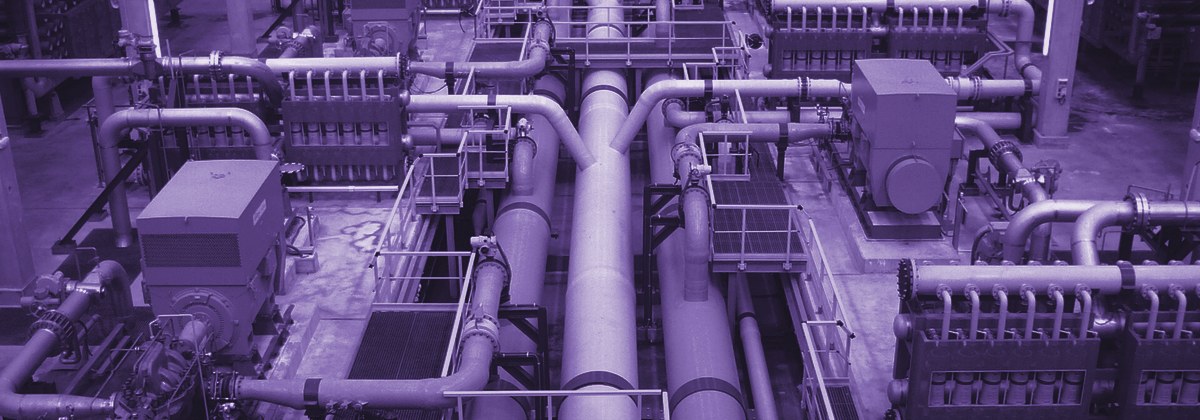
ACWA Power, the Riyadh-listed utility developer, signed a joint development agreement in Jakarta this week with PT Garam, Indonesia's state salt company, for a $400 million facility in East Java that would be the country's first utility-scale plant to combine seawater desalination with industrial salt production. The site at Manyar, in Gresik regency, is planned to deliver 62,500 cubic meters of desalinated water a day alongside roughly 500,000 tonnes of high-purity industrial salt a year. The sum is modest by ACWA's standards. What it buys is entry: Saudi water expertise, priced and packaged, in Southeast Asia's largest economy.
The agreement was signed by Abraham Mose, PT Garam's president director, and Tim Anderson, chief executive of ACWA Power Indonesia, and witnessed by Rosan Roeslani, Indonesia's investment minister and head of its Danantara sovereign fund, together with the Saudi ambassador in Jakarta, Faisal Al-Amodi. ACWA's group chief executive, Samir Serhan, called Indonesia an important growth market for the company. The commercial gap the plant addresses is documented on the Indonesian side: the country consumes around five million tonnes of industrial salt a year and imports roughly half of it.
The pairing of water and salt is the engineering economics of the deal. Desalination concentrates brine that operators normally pay to manage; routing it into salt production converts the plant's main byproduct into its second revenue line, while cutting the import bill the project exists to address. One intake, two products, and a discharge problem turned into a balance-sheet item. For a first-of-its-kind plant in a new market, the structure does as much persuading as the price.
The Model Is the Export
ACWA, in which the Public Investment Fund holds the largest stake, built its business inside Saudi procurement: long-term offtake contracts with state buyers, competitive tenders that pushed tariffs to record lows, and a domestic desalination program, among the largest in the world, that supplies most of the Kingdom's drinking water. What travels abroad is not only the capital but the method. A state partner, a bankable offtake, a developer that finances and operates for decades: the template was rehearsed at home until it became repeatable. The nearly $1 billion of Syrian solar and storage agreements signed this month followed it; the Gresik plant applies it to water.
Danantara's presence at the table places the agreement inside a widening state-to-state investment channel between Riyadh and Jakarta. Indonesia is assembling sovereign investment platforms on a model the Gulf has operated for decades, and it is selecting partners that know how such platforms transact. For Saudi companies, the measure that matters is the one the Kingdom's industrial policy sets for its champions: converting home-market scale into foreign order books, and one-time construction into recurring operating revenue.
The distance from joint development agreement to financial close is where such projects are actually decided, and that timeline, along with whether Garam's other coastal sites extend the partnership, will show whether Gresik is a single plant or the first unit of a series.