The General Authority of Civil Aviation extended the suspension of operations at King Khalid International Airport on Monday, saying checks on the safety and operational readiness of airport sites were still being completed. It gave no reopening time. The restraint is deliberate. Under visible pressure to restore the capital’s gateway, the Kingdom’s aviation regulator is treating resumption as a certification problem rather than a scheduling one: the airport opens when its facilities pass inspection, not when the pressure to reopen says it should.
The decision follows a night that widened the campaign’s map. On Sunday evening a projectile struck Terminal 4 at King Khalid International and started a fire. GACA’s follow-up statement said a Pakistani resident was killed and 11 people were injured and taken to hospital, with material damage still under assessment. The strike came a day after the attack that killed 12 people and injured 309 at the same airport, and it extended a sequence that began on Wednesday. The tolls Saudi authorities have published from six days of attacks on the Kingdom’s airports now stand at 19 dead.
The same evening, the campaign reached the Eastern Province. GACA confirmed that King Fahd International Airport in Dammam was targeted on Sunday evening and said damage assessments and safety inspections were underway in coordination with the relevant authorities. On Saturday night a projectile had fallen near the Dammam airport, the first time it figured in this war; Sunday’s statement records an attack on the airport itself. Riyadh, Jeddah and Dammam together account for roughly 79 percent of the Kingdom’s scheduled departure seats this week, by OAG’s count, which is what makes the eastward extension more than a footnote.
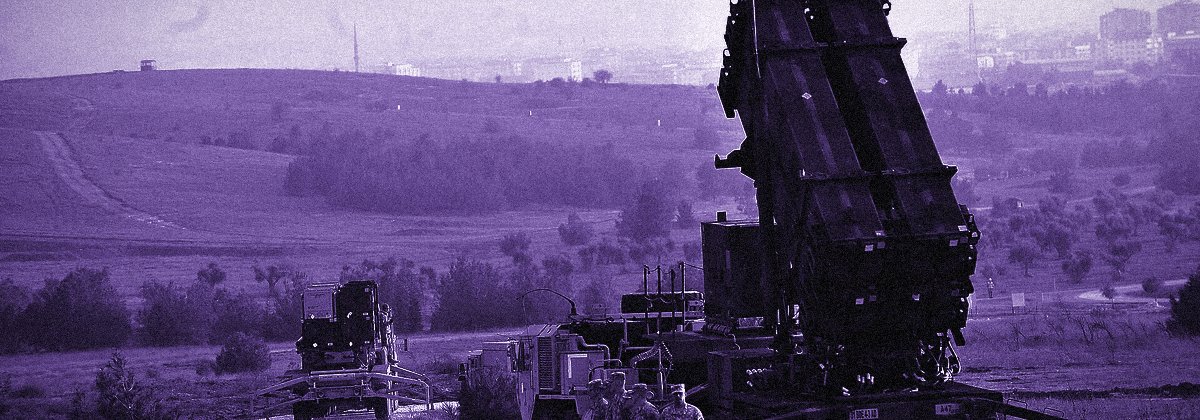
The interception record ran alongside the damage record. Coalition air defenses destroyed a cruise missile near the Riyadh airport and a drone over the Eastern Province on Sunday, according to spokesman Maj. Gen. Turki Al-Malki, and early on Monday they intercepted a ballistic missile launched toward Khamis Mushait. Civil Defense issued an alert for a possible attack on Abha, then declared the danger passed. The coalition said it had detected further threats from drones and cruise missiles targeting the Kingdom and was working to counter them. The ground stop at King Khalid International is holding while the airspace above it is still being defended.
For travelers the arithmetic is immediate. Airlines had planned more than 7,700 departures and about 1.55 million seats from the Kingdom’s 28 airports this week. By mid-afternoon on Monday the aviation data firm Cirium counted 46.4 percent of the day’s scheduled flights across Saudi Arabia as cancelled, and flight trackers recorded more than 170 cancellations at Jeddah and Dammam alone in the morning. Several foreign carriers have suspended Saudi service into next week. GACA’s guidance stands: passengers should confirm their flight status with their airline before traveling.
The state’s other registers stayed active. Foreign Minister Prince Faisal bin Farhan spoke on Sunday with his Iranian counterpart Abbas Araqchi about regional tensions and de-escalation, the Saudi Press Agency reported, and Araqchi said Tehran was ready to help facilitate dialogue. Condemnations of the airport attacks arrived in one wave from Gulf, Arab and European capitals, and the Arab Air Carriers’ Organization put the industry’s position plainly: civilian airports are not battlefields. The record that governs decisions, though, remains the Saudi one, built statement by statement from GACA, the coalition and the civil defense.
What the week has clarified is the target set. The strikes are aimed less at any runway’s schedule than at the system that connects the Kingdom to everything else: terminals, carriers, insurance, passenger confidence. Against that, GACA’s procedural answer protects the harder asset. An airport that reopens on inspection and holds is worth more to carriers and insurers than one that reopens on schedule and closes again. The cost of that choice is counted in cancelled flights now; the alternative would be counted in credibility later.
The entries to watch are unchanged in kind and nearer in time: GACA’s resumption statement for Riyadh, which is the only source that settles the airport’s status; the Dammam assessment; and the form of the response the coalition pledged after Saturday’s strike. The Kingdom’s autumn calendar, meanwhile, is proceeding: the WPC Energy Congress opened in Riyadh on Monday with more than 25,000 participants expected. Its guests are arriving through a narrower door, and the state’s answer to that fact so far has been inspection, interception and statement, in that order.