The weekend produced two facts that read as one. On Saturday morning, Houthi missiles and drones reached Saudi Aramco facilities at Jizan and Yanbu, the movement's first strike on Saudi oil infrastructure in this war rather than on the ships that serve it. That same weekend, for the first time in two weeks, the United States announced no new strikes on Iran. The attack did not interrupt the pause. That detail prices Washington's protection formula more precisely than any statement has.
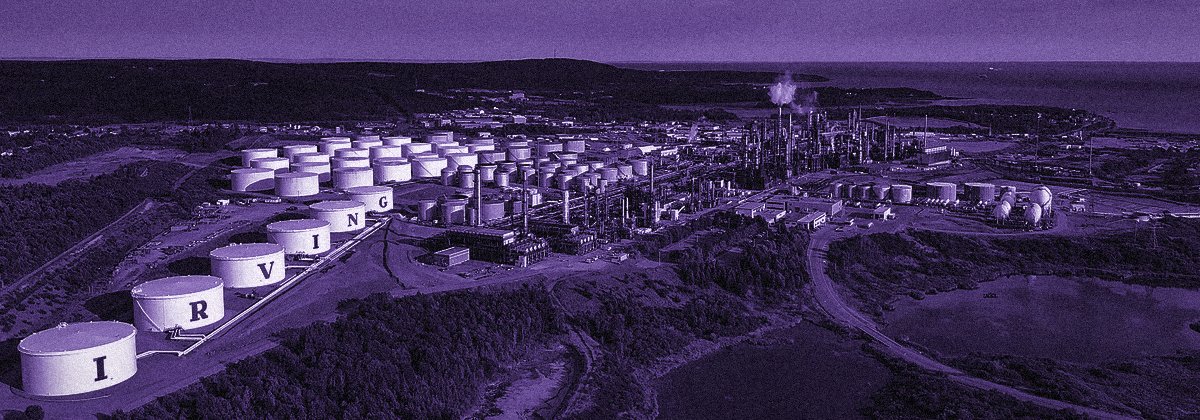
The confirmed record first. Civil defense issued warnings for Jizan and Yanbu early Saturday and lifted them within hours. At Jizan, home to a refinery complex with a capacity of around 400,000 barrels per day, video verified by Reuters showed smoke rising from the site; regional media counted at least five explosions, NASA fire-detection satellites logged multiple hotspots, and trading sources cited possible damage to fuel storage. Saudi authorities reported no casualties and released no damage assessment. At Yanbu, two ballistic missiles were intercepted by a Patriot battery that Greece has operated on the Red Sea coast since 2021 under a bilateral defense agreement; the Hellenic General Staff reported both threats destroyed and no damage below. Houthi spokesman Yahya Saree claimed the strikes as retaliation for Friday's coalition operation against Hodeidah. Abdul Malik al-Houthi went further: all Saudi oil facilities, he said, could be targets.
The Formula, Tested Twice
Thursday's American formula, that the next attack on Saudi Arabia would be treated as an act of Iran and met with "major military punishment," has now been tested twice. Friday's strike on the NCC MASA was answered by Riyadh at Hodeidah. Saturday's strike on Aramco itself, the largest of the campaign, has so far been answered by no one. Axios reported that Trump ordered the halt in Iran strikes on Friday, before the missiles flew; the significant fact is that the missiles did not reverse it. A senior US official described the president's preference as diplomacy, and Trump himself said Friday that Iran was "by far the most serious that we've seen them" in talks, while adding that the United States remained "locked and loaded." Read together, the formula is functioning as leverage inside a negotiation, not as a tripwire. For Riyadh that is information rather than grievance. Protection that fires automatically was never on offer. What is on offer is protection priced into whatever deal Washington is trying to close.
The Strike Map Matched the Risk Map
Yanbu, the kingdom's working export gateway while Hormuz is closed, where rerouted crude arrives by pipeline for loading, was defended in layers and ended the day clean. Jizan, the southernmost refinery and the closest to Yemen, absorbed the visible damage. War-risk quotes had already separated the two, near 0.1 percent of hull value at Yanbu against up to 3 percent off Jizan. Saturday validated the market's geography and the defense architecture behind it: interception concentrated where the export economy lives, warning and dispersal covering the periphery. A fire at Jizan affects product supply in the southwest. The crude stream that funds everything else runs through Yanbu, and it was untouched.
The campaign has changed category even so. Attacks on ships tax commerce at the margin; attacks on national oil infrastructure put fixed assets into the exchange, and al-Houthi's statement made the extension a policy rather than an incident. The loop that last week ran hulls for bases now has a wider aperture on both sides. Yemeni government aircraft struck launch sites in Marib and al-Jawf within hours, the same working-end targeting the coalition applied at Hodeidah. Riyadh's choice is unchanged in kind, retaliation, reliance or mediation, but the arithmetic has moved: a reply now answers an attack on Aramco, while restraint keeps open the negotiating window that the American pause created and that Saturday's attack was likely intended to pressure.
Monday's Readings
War-risk quotes re-mark this week for the first time since oil facilities joined the target set, and the question is whether underwriters treat Yanbu's clean interception as proof of the corridor or Jizan's fires as grounds to widen the exclusion zone. The larger variable sits in the talks. If they advance, Saturday becomes leverage spent inside a closing window. If they collapse, the formula Washington has twice declined to execute returns to the table, carrying less credibility each time it waits.