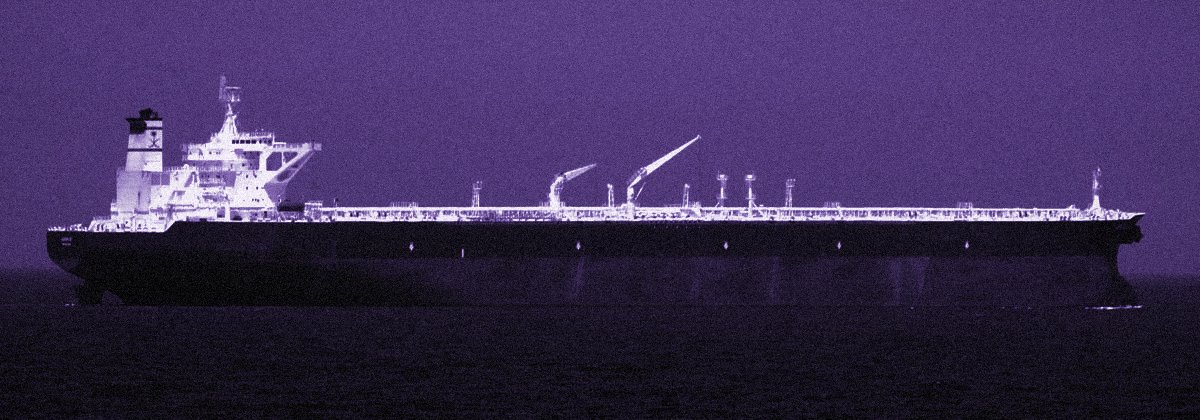
A week ago the war-risk market answered the Houthi blockade with a map: cover quoted at up to 3 percent of hull value off Jizan, a tenth of a point at Jeddah and Yanbu. This week it began replacing the map with a category. Underwriters in the Lloyd's market have told brokers they intend to exclude vessels with Saudi "touchpoints" from war-risk cargo cover in the Red Sea, the Financial Times reported, and two marine insurers, Ascot and Navium, are preparing to withdraw policies. Some existing cover on Saudi-linked vessels is being cancelled outright. The difference between a price and a category is the story. A price follows geography and falls when the shooting stops. A category follows the ship.
The touchpoint standard is broad by design. It is not confined to Saudi flags or Saudi cargo owners; foreign-flagged vessels that have recently called at Saudi ports may carry the exclusion with them to their next fixture. Underwriters applied the same treatment earlier in this war to shipping linked to Israel, the United States and Britain, and membership in that class costs more than any premium. It narrows the pool of carriers willing to load Saudi cargo before a voyage is ever priced, because the exposure attaches to the relationship rather than the route.
The Fleet Is Already Voting
Three tankers operated by Bahri, the national shipping carrier, have switched off their tracking signals, as has the Greek-owned Merbabu. The Chinese-flagged New Champion reversed course on Friday rather than enter the corridor. Going dark is its own kind of evidence: it can breach policy warranties and raise the cost of whatever cover remains, an exchange of insurability for concealment that operators accept only when visibility has become the greater liability.
What the exclusions do not touch is volume, so far. Crude has continued to load at Yanbu at the East-West pipeline's practical ceiling, and Saturday's missile attempt on the port was intercepted; the corridor above the underwriters' line has functioned through every week of the blockade. The friction lands in the surrounding paperwork: chartering, cargo cover, the willingness of discharge ports and counterparties to take on Saudi exposure. Each stage of the market's response, higher rates, then exclusions, then cancellations, raises the transaction cost of Saudi trade without stopping a single ship. That has been the campaign's theory from the start. The missiles are inputs; the clause language does the work.
Routes Around London
Riyadh has answers if it wants them. In 2019, after attacks on shipping near Hormuz, governments and industry built state-backed war-risk arrangements when commercial cover thinned. Bahri's position as a state-owned carrier makes sovereign self-insurance practical, and Aramco can shift its terms of sale so that insurance becomes the buyer's problem rather than the seller's. Each of those routes goes around London rather than through it, and each becomes more likely the longer the touchpoint standard stands. Underwriters price risk, but they also price their own relevance: a market that will not write Saudi business teaches Saudi business to stop asking.
This week's re-marks will show whether the standard hardens into common clause language or remains the position of a few lead underwriters. The sharper tell will be quieter than a quote sheet: which fixtures conclude, which cargoes load, and at what friction. Blockades declared at a distance are enforced, or dissolved, in those transactions.