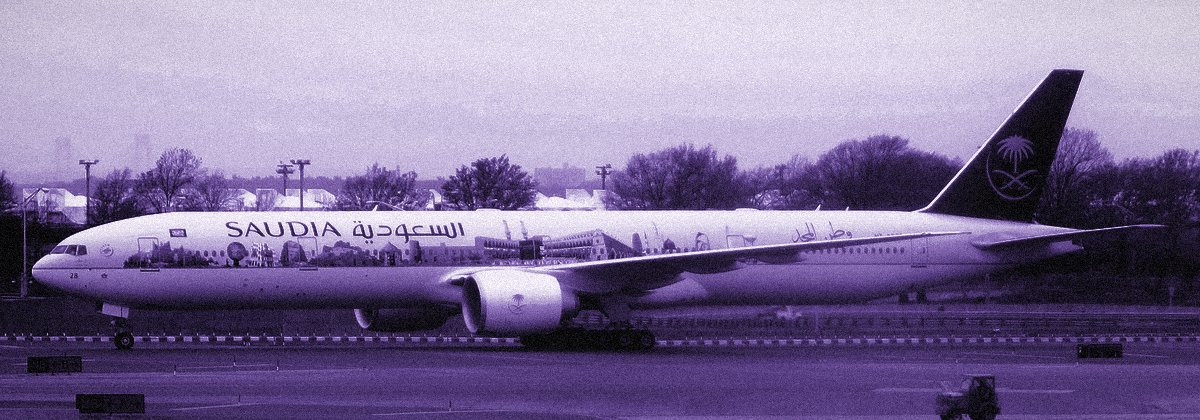
Dammam gets its own airline on Sunday. The General Authority of Civil Aviation granted an air operator certificate on Monday to a consortium of Air Arabia Group, Nesma Group and Kun Holding, and the new low-cost carrier begins service from King Fahd International Airport on September 20 with a first departure to Riyadh. The Kingdom’s aviation expansion has run on two poles, Jeddah’s established hub and the capital’s buildout around Riyadh Air. The Eastern Province now gets a carrier whose route planning starts at home.
The opening schedule is domestic and dense rather than long and thin. Launch plans reported this week put Riyadh and Jeddah at twice daily and Madinah at daily, flown on the Airbus A320s that Air Arabia operates across its network. The certificate sets the ceiling much higher: 24 domestic and 57 international destinations by 2030, roughly ten million passengers a year, and more than 2,400 direct jobs, with majority Saudi ownership throughout. Suppliers are already contracting for that scale. CATRION, the Riyadh-listed caterer that also serves Riyadh Air and flynas, disclosed a five-year, SR200 million catering agreement with Air Arabia to the exchange on Wednesday.
The Eastern Province has been the conspicuous gap in the Kingdom’s airline map. It holds the country’s industrial core, a business-travel base that flies on contract cycles rather than seasons, and a population of millions served until now by carriers whose schedules are planned from Jeddah and Riyadh. Its geography also leaks demand: Bahrain’s airport sits within an easy drive of the causeway, and traffic that starts in Khobar or Dammam has often crossed it to fly. A carrier that banks aircraft overnight at King Fahd International competes for that traffic where it originates.
The structure of the venture says as much as the route map. Riyadh Air was built from a blank sheet with sovereign capital and a full-service model. The Dammam project instead imports an operating system that already works: Air Arabia runs one of the lowest cost bases in the region, and the consortium pairs that discipline with Saudi partners and majority Saudi ownership. GACA’s framing was explicit. The launch, said GACA’s Captain Sulaiman bin Saleh Almuhaimedi, “will contribute to enhancing competition and improving performance in the air transport market.” With flynas and flyadeal already flying the trunk routes, the regulator is adding a third low-cost competitor rather than protecting the two it has.
The first three destinations sketch the commercial logic. Riyadh and Jeddah carry the business and government traffic that anchors utilization from day one. Daily Madinah service points at Umrah demand routed through an eastern gateway, a corridor that grows with every expansion of the pilgrim quota and one where an eastern base can collect passengers from the Gulf side of the Kingdom. Starting domestic also lets the airline build crews, dispatch reliability and slot positions before it commits aircraft to international rights, the sequence low-cost carriers use when a new base has to prove itself quickly.
Adel Al Ali, Air Arabia’s group chief executive, called the launch a strategic milestone and said the carrier would offer “a wider choice of direct domestic and international destinations” from the Eastern Province. Mohammed Al-Hassany, chief executive of Dammam Airports, read it as evidence of the airport’s next phase of growth. Both statements will be tested by the same instrument: the schedule.
What to watch is concrete. The carrier has not yet announced its brand name, its first international points or its fleet induction rate, and each will show how fast the consortium intends to climb toward the 81-destination target. The winter timetable will show whether twice daily holds on the trunk routes. And the next tell after that is whether other suppliers follow CATRION in contracting early. Airlines reveal their intentions through commitments, and the first one lands at King Fahd International on Sunday morning.