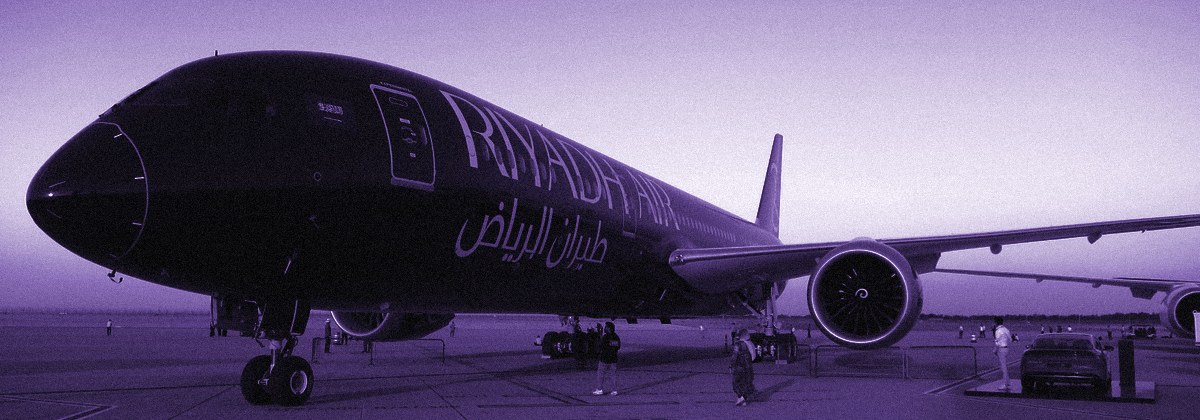
Riyadh Air marked a first this week that had nothing to do with a route or an aircraft order. Twenty-six Saudi women received diplomas in aircraft maintenance engineering at the airline’s Riyadh headquarters, the first cohort to complete a program the carrier built with Colleges of Excellence and the International Aviation Technical College. The number is small. The category is not. Route launches and fleet announcements are the visible half of the Kingdom’s aviation expansion; whether the schedules those announcements promise actually hold is decided by certified engineers on hangar floors, and airlines everywhere are short of them.
The program’s facts are quickly told. Riyadh Air took in its first intake of female trainee engineers in 2024, put them through a diploma course aligned with international certification standards, and graduated 26 of them this week. Nahar Al-Juhani, the airline’s senior vice president for talent acquisition, framed the ceremony in workforce terms: “Investing in national talent remains central to Riyadh Air’s development and supports Saudi Vision 2030 goals.” The graduation sits alongside the carrier’s other pipelines, including the Nawa graduate program, cabin crew training and scholarships in piloting and maintenance.
Maintenance is the least glamorous line in an airline’s budget and one of the most strategic. A widebody fleet demands scheduled checks measured in thousands of engineer hours, and carriers that lack the workforce export the work, flying aircraft to Istanbul, Dubai or Singapore for heavy maintenance and paying for the privilege in both cash and aircraft days. Riyadh Air is building its network quickly: Kuala Lumpur in July, Pakistan routes in August, a daily Manila service from September 9. Every added frequency adds engineer hours somewhere. Training those engineers in Riyadh converts a cost that would otherwise leave the country into domestic wages and, over time, into a service the Kingdom can sell to other carriers.
The graduates also extend a pattern in who does the Kingdom’s technical work. flynas graduated the first Saudi women flight attendants in 2019; Riyadh Air’s early cabin crew cohorts included women; certified maintenance engineering is a further step, a licensed technical trade with safety authority attached. The airline, wholly owned by the Public Investment Fund, is treating the widening of its recruiting pool as an operational matter rather than a symbolic one. An aviation buildout on the scale the national strategy envisions cannot be staffed from half the labor market.
There is also a timing logic to starting the pipeline now, before the airline’s fleet reaches full size. Certifying a maintenance engineer takes years of coursework and supervised hours; an airline that waits until the aircraft arrive to train the people who keep them flying has already lost the race and must hire abroad at market rates. By graduating its first engineers while the network is still young, the carrier is sequencing people ahead of metal, which is the cheaper order.
The measure of this week’s ceremony is what follows it. One cohort of 26 does not maintain a fleet; a pipeline that produces cohorts every year, across several carriers and a growing maintenance industry, changes the economics of Saudi aviation. Watch three things: whether the intake scales, whether Saudia and flynas build equivalent programs at matching pace, and whether heavy maintenance work that today leaves the Gulf begins to stay in the Kingdom. The airline hired its first women engineers this week. The more consequential number is how many hangars they eventually run.