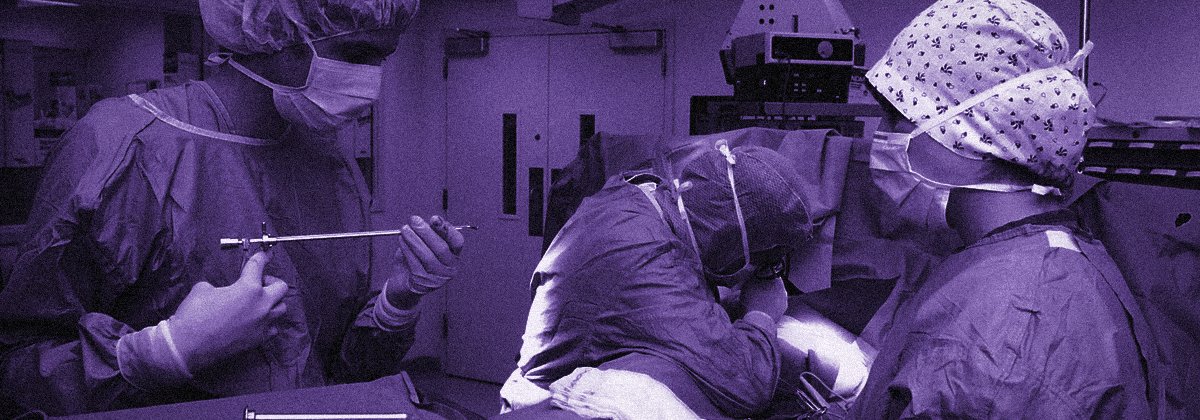
The binding constraint in transplant medicine is not surgical skill, hospital beds, or money. It is organs. King Faisal Specialist Hospital and Research Centre in Riyadh reported this week an answer of technique to a problem of supply: the first pediatric domino heart transplant performed in the Middle East and Europe, by the hospital's account, in which a single donated heart set off a chain that treated two children.
The confirmed sequence runs as follows. The first patient, a twelve-year-old boy with dilated cardiomyopathy and end-stage heart failure, had spent six weeks in hospital on continuous cardiac support medication waiting for a donor heart. When one became available, surgeons transplanted it. His own explanted heart had failed as a pump, but it still carried a healthy pulmonary valve and root. That living tissue went to the second patient, a nine-year-old boy born with severe narrowing and leakage of the aortic valve, who had already been through two repair operations. Surgeons rebuilt his heart in a Ross procedure using the recovered valve tissue.
The second operation is the one with the longest consequences. A mechanical or preserved valve implanted in a nine-year-old is a subscription to future surgery: fixed-size hardware in a growing chest guarantees replacement operations, each carrying its own risk and recovery. Living valve tissue can grow with the child. Dr. Hani Alsergani, executive director of the hospital's Heart Centre of Excellence, called the procedure “one of the rarest forms of partial heart transplant” and said it places the hospital among a select group of centers worldwide able to perform it.
The analysis begins where the surgery ends. Every transplant system on earth is rationed by donation rates, which rise slowly because they depend on culture, family consent, and hospital logistics rather than on budgets. Techniques that raise the yield of each donation are the fastest multiplier available. One heart treating two children is a doubling of therapeutic output from the same donor pool, achieved not by finding more donors but by wasting less of what each donor gives. For a young country with a young population, pediatric cardiac capacity is not a niche; it is where the waiting lists are longest and the years of life at stake are greatest.
The announcement also lands in a health system in the middle of restructuring. Ten health clusters are moving to the Health Holding Company, and the Health Ministry is becoming a regulator of services it no longer operates. In that architecture, King Faisal Specialist functions as the apex of the referral pyramid, the place where the hardest national cases concentrate. Concentration is the point. Domino transplants depend on coincidence engineered into routine: a heart recipient whose valves are healthy, a valve patient of compatible size, both ready in the same building on the same timeline. The more rare cases flow through one center, the more often that chain lines up. A capability like this is kept by using it.
There is a quieter economic reading. Procedures of this complexity once defined the case for treatment abroad, with the costs, the family dislocation, and the loss of accumulated clinical experience that travel entails. Each first performed in Riyadh keeps the case, the spending, and the learning at home, and adds to a record the hospital now cites through external rankings, including first place in the Middle East and Africa and twelfth globally among 250 academic medical centers in a 2026 listing.
What to watch is whether a case becomes a program. A single domino transplant proves the capability; a pipeline of them requires matching software, tissue banking, and referral protocols that treat every explanted heart as potential donor material. The other number to follow is enrollment in the national donor registry, because technique multiplies donations rather than replacing them. The hospital has shown what one heart can do. How many hearts arrive remains the variable that matters.