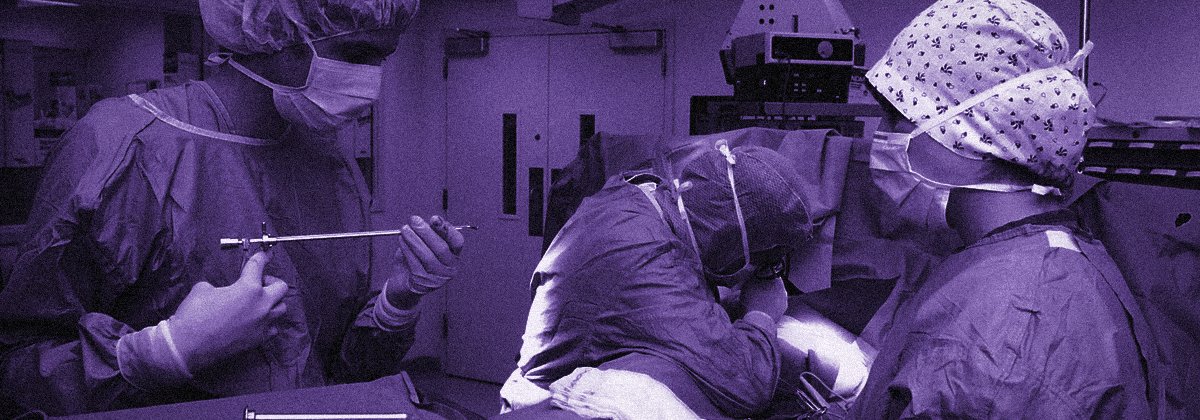
Seha Virtual Hospital’s surgical teams in Riyadh have completed eleven consecutive robotic operations on patients elsewhere in the Kingdom, including in Hail, the Health Ministry’s virtual-care arm announced this week through the Saudi Press Agency. One of them, a resection of the right lower lobe of a lung, was recorded as only the second such procedure performed remotely anywhere in the world. The individual operations are notable. The series is the story. Three weeks after the Kingdom’s first remote robotic surgery linked Riyadh to Jeddah, remote operation is running as a program with a cadence, not a demonstration staged for a single day.
The confirmed facts are these. The eleven procedures included the lung resection, a sleeve gastrectomy, hernia repairs, a pelvic exploration and a hysterectomy: general and specialist surgery, not a single showcase specialty. The robotic systems carry Saudi Food and Drug Authority approval for clinical use. The operations ran under the Saudi protocol for remote surgical procedures, the national framework Seha Virtual Hospital launched to govern how such operations are authorized, staffed and monitored. Patients were in Hail and other locations while the operating teams remained in Riyadh.
The problem being engineered around is the geography of expertise. Complex surgery concentrates where case volumes are high, because volume is what keeps surgical teams sharp, and in Saudi Arabia that has meant Riyadh, Jeddah and the Eastern Province. The traditional answers were to move the patient, at the cost of travel, delay and displaced families, or to replicate tertiary hospitals in every region, which takes a decade and competes for the same scarce specialists. Operating over the network inverts the equation: the case volume stays centralized, which is what preserves quality, while access is distributed to wherever a robotic theater and a local clinical team exist.
The Protocol Is the Asset
The technology involved is available on the world market. What is scarcer is a written national framework that turns remote surgery into a licensed, repeatable service, with device approval from the national regulator attached. That is what separates a health system that has performed a remote operation from one that performs them on Tuesdays. It also builds the record that matters clinically: a standing program generates outcome data across dozens of procedures, and outcome data, published, is what would make the Saudi protocol a reference for other health systems rather than a domestic arrangement.
Seha Virtual Hospital is the natural home for the program because scale is its founding premise. Recognized by Guinness World Records as the largest virtual hospital in the world, it connects 241 hospitals and more than 1,400 health centers across 114 specialties and subspecialties. Remote surgery extends that logic from consultation and diagnosis, where distance medicine is now unremarkable, into the operating theater, where it is not. For a patient in Hail, the practical meaning is that a Riyadh subspecialist’s operating list is no longer rationed by airline schedules.
What to watch is the boundary of the program: which procedure families are added next, how many regional hospitals are brought inside the protocol, and whether the ministry begins publishing outcome comparisons between remote and conventional cases. The program will have matured when the surgeon’s location stops being the newsworthy part of the operation.