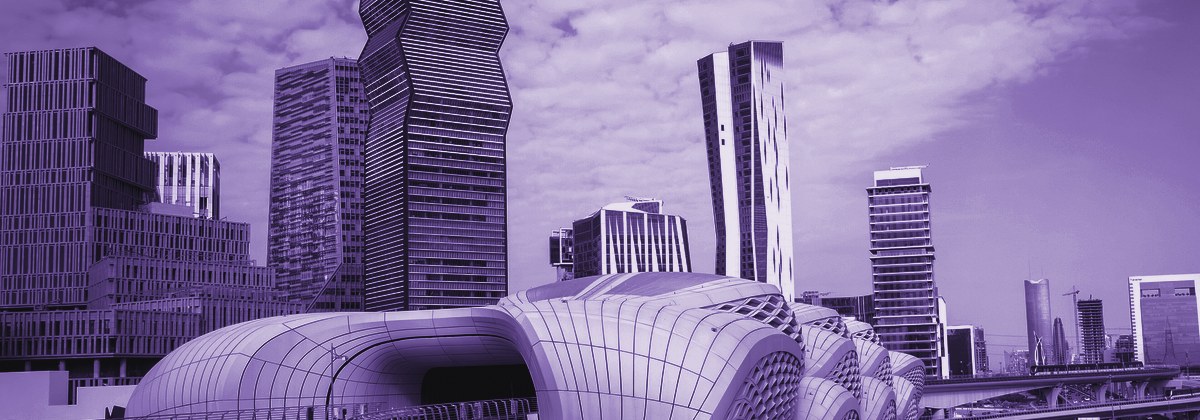
The Transport General Authority’s half-year figures, published this week through the Saudi Press Agency, describe a change in what trains are for in the Kingdom. Rail networks carried 83 million passengers between January and June, an increase of 16 percent, or 11.5 million additional journeys, on the first half of 2025. Urban systems accounted for 78 million of those trips. The Riyadh Metro alone carried 60.7 million riders, nearly three of every four rail journeys in the country. For most of its history Saudi rail meant two things: pilgrims moving between the holy cities and minerals moving south from the northern mines. By volume, it now means the commute.
The second quarter is the reading that matters. New transit systems open to curiosity, and first-year numbers can flatter. The metro carried 31 million passengers in the first quarter and 29.7 million in the second, a 26 percent increase on the same quarter of 2025, when the system was in its early months. A drop of four percent from one quarter to the next, across the onset of a Riyadh summer, is the signature of a ridership base that commutes because it works, not because it is new. Six lines and 85 stations opened essentially at once in late 2024; the risk in building at that scale is empty trains. Sixty million riders in a half year is the opposite problem.
What the metro changes for the capital is arithmetic. Riyadh’s population keeps growing, its labor market keeps pulling in workers, and until 2025 nearly every additional worker meant an additional car. A functioning metro converts road congestion into rail frequency, and it reprices location: a district an hour’s drive from work at rush hour may be twenty minutes by train. That logic compounds through the decade Riyadh has planned for itself, with Expo 2030 and a stated ambition to roughly double the city’s economy. The daily capacity to move people is the quiet precondition for all of it.
The Rest of the Network
Elsewhere the numbers follow their own calendars. The Haramain High Speed Railway carried 3.6 million passengers in the half, a flow that rises and falls with Umrah seasons and the lunar calendar rather than the working week. The automated people mover at King Abdulaziz International Airport in Jeddah accounted for most of the remaining urban volume, with the Princess Nourah University line adding about 1.3 million trips. The intercity Eastern and Northern trains moved several hundred thousand passengers each. Freight carried 7.7 million tons of minerals and goods in the half, the tonnage that reflects the mining expansion the Kingdom is financing in its north.
The commercial meaning of the urban shift is stability. Pilgrimage traffic is seasonal and event-driven; commuting is daily and predictable. A rail operator whose largest business is the working week can plan fleet, staffing and maintenance against a steady base, and a city that knows its stations will be full can justify feeder buses, station-area development and the next phase of lines. Riyadh’s experience is also now the reference case inside the Kingdom: the metro was a fifteen-year project that arrived late and over budget, as most metros do, and then found its riders faster than most metros do.
The figures to watch next are quarterly cadence rather than annual totals: whether the metro holds near 30 million rides through the third quarter’s peak heat, whether airport and university lines keep their growth as the academic year returns in September, and how quickly planning conversations in Jeddah and the Eastern Province absorb the lesson that the capital’s riders have already delivered a verdict on urban rail.