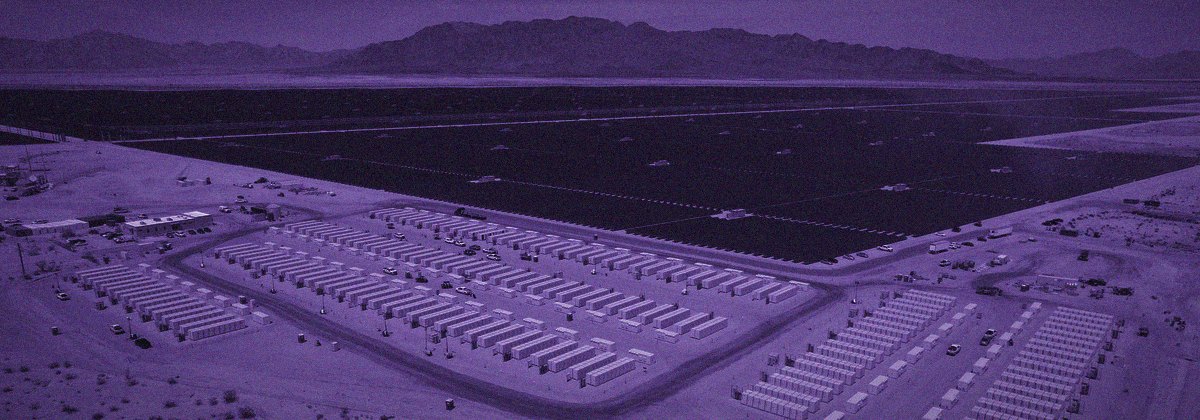
Red Sea Global and ACWA Power have signed the commercial operation certificate for the system that powers The Red Sea destination, starting a 25-year concession. The record involved, a 1,227 megawatt-hour battery the partners call the world’s largest off-grid storage system, makes the headline. The structure carries the meaning. A private consortium now sells five utilities, power, drinking water, wastewater treatment, district cooling and waste management, under contract to a tourism destination that runs entirely without a connection to the national grid.
The project company, Marafiq Red Sea for Energy Co., pairs ACWA Power with SPIC Huanghe Hydropower and Saudi Tabreed, working alongside Red Sea Utilities Co., a Red Sea Global subsidiary. The plant list runs to a 340 megawatt solar array, the battery, three seawater reverse-osmosis desalination plants, sewage treatment sized at 16,000 cubic meters a day, district cooling and a waste management center. Annual generation capacity reaches 760,000 megawatt-hours, with roughly 600,000 tonnes of carbon dioxide avoided each year. The load it carries is no longer a commissioning test: operating hotels, Red Sea International Airport, a logistics hub, a staff village and an electric vehicle fleet.
Off-grid was a choice, and an economic one. Wiring a remote coast into the national grid means transmission built ahead of demand, and transmission is the scarce resource beneath most of the Kingdom’s coastal projects. Generating, storing, desalinating and cooling on site removed the wait, and it removes the destination from the national load forecast entirely. The cost of that independence is paid across 25 years through the concession rather than up front, which is what makes the model financeable.
A commercial operation date moves risk, not electrons. Construction risk is retired; the consortium is now paid for availability, and the developer buys outcomes, lit rooms, cold air, fresh water, rather than owning plants. Red Sea Global gets utilities as an operating cost that scales with the resort. ACWA Power gets something it can price abroad: a home-market reference for the integrated solar, storage and desalination package it sells internationally, now proven through to commercial operation at destination scale.
Resort load is an unforgiving customer. It is seasonal, peaks with summer cooling, and runs through the night on stored charge, because there is no grid to lean on after sunset. The battery was sized to carry the destination to morning, and that test now repeats nightly under contract. Each opening adds load the system was designed to absorb: Rosewood AMAALA opened in August, Equinox followed this month farther up the coast, and the same off-grid logic was planned into that neighboring destination from the start.
The demonstration effect is the return the Kingdom collects beyond the destination itself. Projects on remote coasts all face the same utilities question, and a concession that has reached commercial operation gives their planners a costed answer rather than a rendering. The numbers to watch now are operational: availability through the first full summer, and whether treated wastewater delivers the wetlands and landscape irrigation the masterplan assigns it. A record battery is a claim. A full season of uninterrupted resort load is the proof, and the clock on it has started.