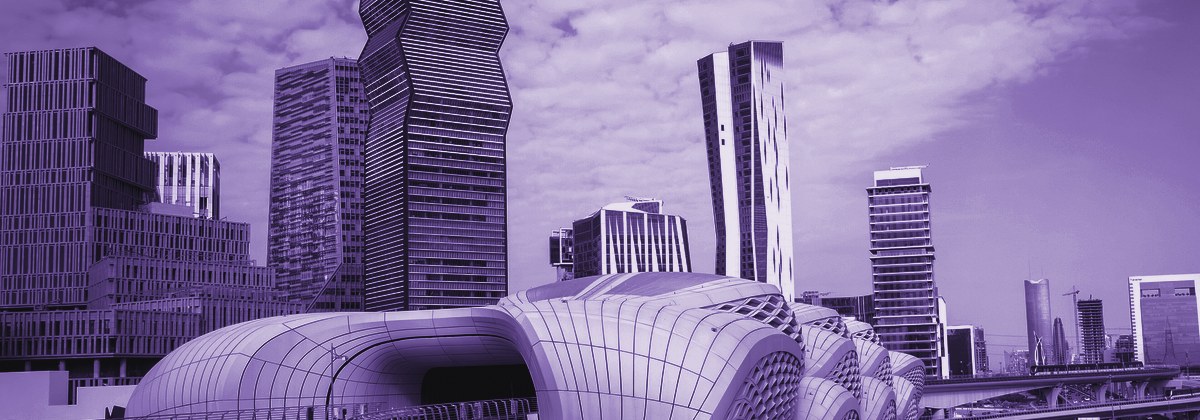
Less than two years after its first trains ran, Riyadh Metro is buying more. The Royal Commission for Riyadh City has signed a contract worth about 460 million euros, roughly SR2 billion, with Alstom for additional driverless trains on three of the network’s six lines, the manufacturer announced on Monday. The purchase is a verdict on demand. A system designed and tendered a decade ago is being resized upward before its second anniversary.
The order covers Line 3, the Orange line running along Madinah Road; Line 4, the Yellow line serving the King Khalid International Airport corridor; and Line 6, the Purple line through the city’s eastern districts. The new trains come from the same Metropolis family as the 116 driverless trains already delivered and will run under the network’s existing signalling. Alstom will maintain them under the operations and maintenance contract already in force, and will book the order in the second quarter of its 2026-27 financial year. Neither party has published a train count or a delivery schedule. “This new order reflects the trust placed in Alstom,” said Mohamed Khalil, the company’s managing director for the region.
The figure that carries the decision is ridership: more than 100 million passengers since the lines opened in stages from late 2024. Riyadh was built around the car, and the open question at launch was whether a rail system could change the habits of a city of eight million. The first full year has answered a narrower and more useful question: at current capacity, the trains fill. The constraint on ridership is now rolling stock and frequency, not willingness to ride.
Where the trains go says what the commission is planning for. None of the three lines is the Blue line trunk under Olaya that drew the opening-day attention. The capacity is going to the lines that move residents between districts and to the airport, which is where a commuting system, as opposed to a showcase, earns its ridership. One of the three also carries a fixed date: the Yellow line serves the corridor on which Riyadh will stage Expo 2030, and the event’s transport plan will lean on it.
The form of the deal matters as much as its size. Expanding inside the existing supply and maintenance framework keeps one fleet family, one signalling system and one maintenance regime, and it trades the price discovery of a fresh tender for speed. With a date like Expo on the calendar, speed is worth paying for. The order also keeps the metro’s growth inside a relationship the commission already knows how to manage, which is how most of the capital’s infrastructure programs have handled expansion this year.
The metro sits at the center of a larger pattern in the capital’s numbers. Building permits, office leasing and event attendance all describe a city adding residents and visitors faster than its infrastructure cycle anticipated. The transit system is the piece that converts that growth from congestion into capacity, and the commission has now priced two more years of it at about SR2 billion.
The open questions are the ones the announcement left out: how many trains, and when they arrive. Ridership through Riyadh Season, which opens on 21 October and loads the network’s event districts, will show how much headroom the current fleet has. Further out sits the same question at airport scale, as the King Salman International Airport build-out advances on the corridor the Yellow line already serves. A system that needed more trains at year two will meet that question early.