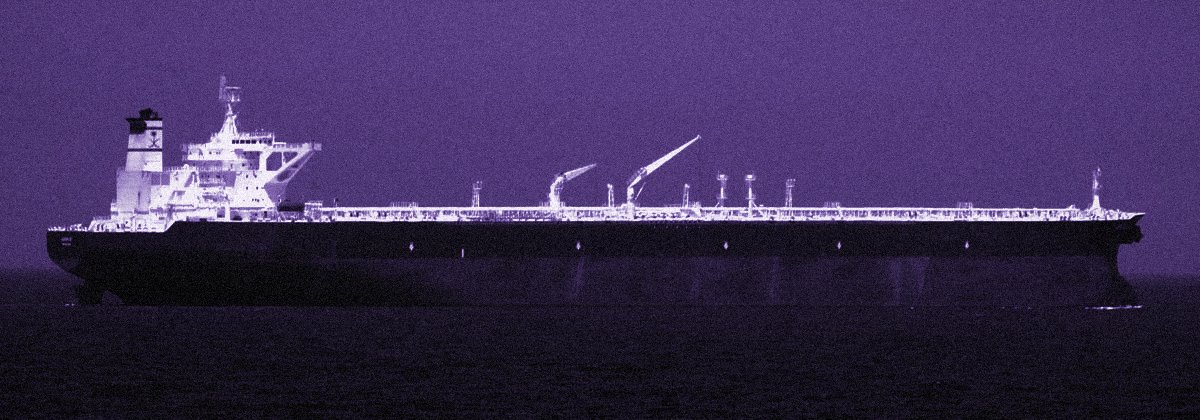
For months the war around the Strait of Hormuz has priced itself in freight rates, insurance premiums and rerouted cargoes. This week it was priced in crew. Bahri, the Kingdom’s national shipping carrier, confirmed that two Filipino seafarers aboard its oil tanker Sidr were killed after the vessel came under attack on Monday evening while transiting the strait. The Foreign Ministry answered on Wednesday with a statement built in two registers: it condemned what it called an Iranian attack on the tanker, and it called on all parties to stop the escalation and return to negotiations. Read together, the two halves are Saudi policy in miniature. Name the act, and keep the exit open.
The confirmed record sits in two statements. Bahri described a security incident during the Sidr’s transit and said it lost two Filipino seafarers as a result. The company said it remains in constant communication with the vessel, is coordinating with the relevant authorities, and that the safety of its crews, the protection of the marine environment and the safe management of its fleet are its priorities. It did not describe the weapon, the damage or the cargo, and this article does not guess at them. The Foreign Ministry went further on attribution: it condemned Iran’s targeting of the Sidr and grouped it with Iranian attacks on Jordan, Bahrain and Kuwait, expressing full support and solidarity with the three countries in the measures they take to protect their security and sovereignty.
The ministry’s formula has been stable through this war: condemn the attack, insist on the safety of international shipping lanes and of global energy supplies, and call for “negotiations and peaceful solutions.” What Wednesday showed is that the formula holds even with Saudi losses to mourn. The consistency is the policy. Riyadh has spent the year insisting that Gulf commerce is not a legitimate front in anyone’s war, and it declines to let a strike on its own fleet rewrite that position into a feud. The grouping matters for the same reason: by folding the Sidr into a single statement with Amman, Manama and Kuwait City, the ministry framed the incident as an attack on the Gulf’s common space rather than a bilateral grievance, which widens the diplomatic weight behind any response and narrows the room to isolate one capital.
The second Saudi answer came the same day, from a different ministry. The Ministry of Defense announced that the Multinational Maritime Defense Coalition has begun its operational phase from its command headquarters in the Kingdom. Pakistan’s Commodore Rashid Sheikh has assumed his duties as deputy commander, and liaison officers from countries still completing accession procedures are being assigned to the headquarters. The coalition’s mandate runs through the Red Sea, Bab al-Mandab and the Gulf of Aden, the Kingdom’s western corridor; the Sidr was hit on the eastern one. They are still parts of a single problem. Saudi trade lives on two waterways, and in the same week one of them produced casualties, the institution built for the other moved from staffing to operations, thirteen months of paperwork becoming a watch floor.
The deaths change the strait’s arithmetic in a way that reaches beyond any one fleet. Until now the cost of a Hormuz transit has been actuarial: war-risk premiums, longer routes, higher freight. Crews are a different ledger. The Philippines supplies more of the world’s merchant seafarers than any other country, and its manning agencies, unions and government now have two names to weigh when Gulf voyage orders arrive. If crews begin declining the transit, or pricing it as a war-zone posting, that constraint binds every operator in the Gulf, whatever the insurance market does. Shipping can absorb higher premiums. It cannot sail without sailors.
Three things will show where this goes. Whether Bahri adjusts its transit posture, which would say more about the practical risk than any statement. Whether the solidarity offered to Jordan, Bahrain and Kuwait takes institutional form, through the Makkah Joint Defence Agreement’s new committee machinery or a narrower maritime arrangement. And whether the coalition’s operational start remains a Red Sea instrument or becomes the template the Gulf side eventually copies. The pattern of the Kingdom’s year is that escalation is answered with institutions. The week the Sidr’s crew died, another one came online.