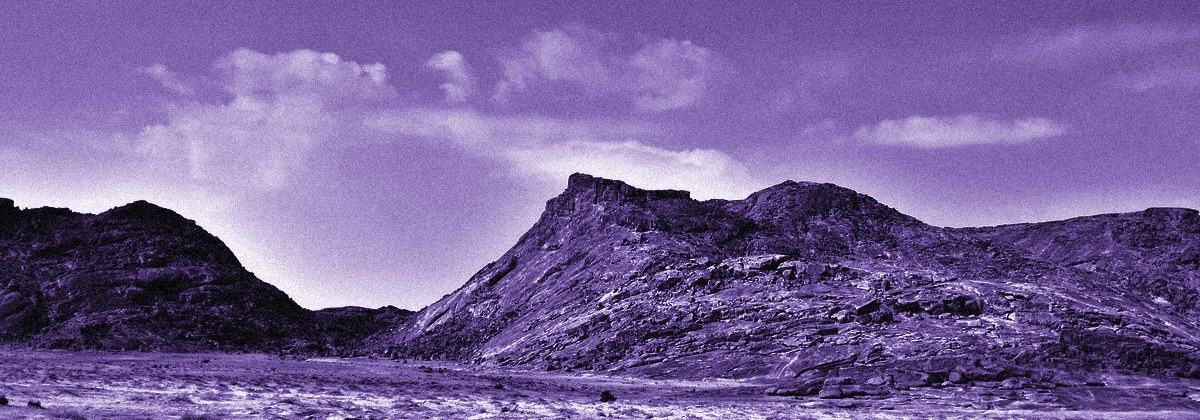
Saudi Arabia’s two largest state companies have agreed to search the same ground. Maaden and Aramco signed a shareholders’ agreement this week creating a joint venture to explore Zone 4, known as the Transition Zone, a corridor of the Arabian Platform about 100 kilometers wide that runs parallel to the Arabian Shield and covers 182,000 square kilometers, roughly a tenth of the Kingdom’s territory. Maaden holds 51 percent and operational control. Aramco holds 49 percent and contributes the asset that makes the venture worth watching: about ninety years of geological data gathered in the search for oil.
Exploration is an information business before it is a drilling business. The Arabian Shield, where the Kingdom’s mines have historically clustered, exposes mineralized basement rock at the surface, which is why prospectors have worked it since antiquity. East of the Shield the same geology dips beneath sedimentary cover, and ore bodies under cover cannot be found by walking the ground. They are found with seismic surveys, gravity and magnetic maps, well logs and the computing power to read them together, precisely the toolkit the oil industry built and Aramco has applied to the Arabian Platform since the 1930s. “Maaden’s expertise, our people, high-performance computing, and artificial intelligence are expected to play a pivotal role,” said Saleh Al-Saleh, Aramco’s vice president of transition minerals.
Copper First
The venture’s target list starts with copper and runs through zinc, lead, rare earth elements, gold, silver and nickel, the minerals that power grids, data centers and electric drivetrains consume. The sequencing follows the Kingdom’s own demand curve: transmission lines, desalination plants and computing infrastructure are being built at a pace that will make Saudi Arabia a heavy copper buyer for decades, and a domestic source would shorten a supply chain currently anchored in Chile, Peru and the Democratic Republic of the Congo. A discovery in the Transition Zone would serve the home market before it served any export ambition.
The ownership split is its own signal. At 51 percent, Maaden keeps the venture inside the national mining champion, consolidated with its balance sheet and run on mining discipline rather than as an oil company’s side project. Aramco’s minority position prices its contribution as data, compute and people rather than capital. “By combining Maaden’s exploration expertise with Aramco’s extraordinary knowledge of the Arabian Platform, we would have an opportunity to move faster,” said Darryl Clark, Maaden’s executive vice president for exploration.
The Wider Ledger
The arithmetic around the deal is the familiar one: an official estimate of SR9.3 trillion ($2.5 trillion) in mineral endowment, a target of SR240 billion (about $64 billion) in mining contribution to GDP by 2030, and mining’s designation as the intended third pillar of Saudi industry beside oil and petrochemicals. The state released 50,000 square kilometers for exploration last year; the new venture multiplies that ambition by more than three in a single agreement. The plan was first announced in January 2025. The signature this week turns it into a company, pending regulatory approvals.
Saudi mining capital is moving outward at the same time. The Saudi Gold Refinery Co., a private firm holding about 25 exploration licenses inside the Kingdom, said this week it has applied for exploration licenses in Egypt’s Eastern Desert and aims to begin production there before 2030, according to chairman Suliman Al-Othaim. The two announcements describe the same maturing: an industry that spent its first decade on licensing rounds and geological surveys is starting to allocate serious capital, at home and abroad.
The constraint the venture cannot engineer away is time. The global average from discovery to producing mine runs well over a decade, which means ore found in the Transition Zone in this decade becomes revenue in the next. What data can compress is the front of that timeline: knowing where to drill first. The venture’s early test will be visible in its first exploration program, and in whether ninety years of oil maps make the search for copper shorter than the search for oil was.