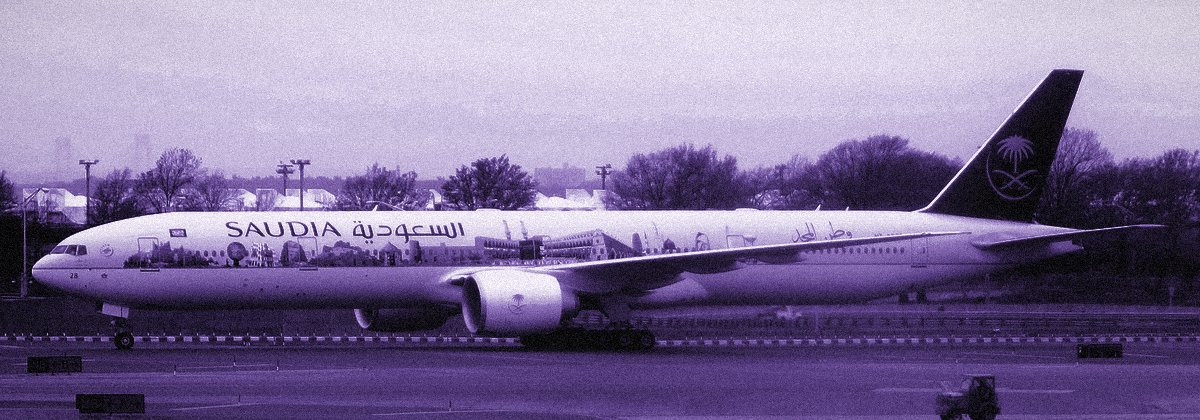
Flyadeal, the budget arm of Saudia Group, will fly between Riyadh and Mumbai five times a week from October 3, using A320neo aircraft and adding more than 7,400 seats a month to the route. Mumbai becomes the carrier's second Indian city after Hyderabad, opened in July. The announcement lands days after Riyadh Air began daily Riyadh to Mumbai service with its 787-9s. Two Saudi carriers committing to the same foreign route within a month is not a coincidence of scheduling; it is a reading of where the Kingdom's air traffic is going.
The demand is measured, not assumed. India was the second most popular foreign destination for travelers from Saudi Arabia in 2024, with more than 3.4 million trips recorded, and the Indian community in the Kingdom is among its largest expatriate groups. The corridor carries workers home, families on leave, Saudi tourists outbound and Indian business travelers inbound, a mix that fills aircraft in both directions and across seasons. October timing puts the new frequencies in place ahead of the autumn festival season, the heaviest travel weeks of the Indian year.
What is notable is how deliberately the capacity is being layered. Riyadh Air sells the premium product: a widebody with four cabin classes, built for corporate traffic and connections through the capital. Flyadeal prices the same city pair for the passenger who would otherwise route through a third country hub on the cheapest fare available. Saudia Group placing its low-cost brand underneath Riyadh Air's launch rather than against it splits the market by wallet instead of splitting it by airline, and it keeps both ends of the fare ladder on Saudi metal.
The Corridor Logic
For decades the traffic between India and the Kingdom, and beyond it to Europe and the Americas, has moved substantially through hubs elsewhere in the Gulf. Direct frequency is how that changes. Every nonstop rotation between Riyadh and Mumbai converts transfer passengers into origin-and-destination passengers, and every additional Indian city served from Saudi airports deepens the network effect the national aviation strategy is paying for. The strategy's stated targets, 330 million passengers and connections to 250 destinations by 2030, are built from exactly these increments.
Flyadeal's acting chief executive, Sanjiv Kapoor, called India central to the airline's international growth, and the fleet plan backs the claim: 47 aircraft today across more than 40 destinations, with the airline aiming to double both by 2030. Indian industry has noticed; the Confederation of Indian Industry welcomed the frequency as a boost to tourism and commercial ties.
The economics of the route will be watched closely inside both carriers. Low-cost economics on a four-hour international sector depend on turnaround discipline and load factors that budget carriers do not always find on launch. Flyadeal's Hyderabad experience since July, and Saudia Group's distribution muscle among Indian workers booking travel from inside the Kingdom, are the assets it brings to the problem.
The next signals to watch are which Indian cities follow, whether Jeddah and Dammam get their own Mumbai frequencies to serve the western and eastern population centers, and how quickly the two Saudi carriers' combined India seats begin to register in the transfer statistics of the region's older hubs.