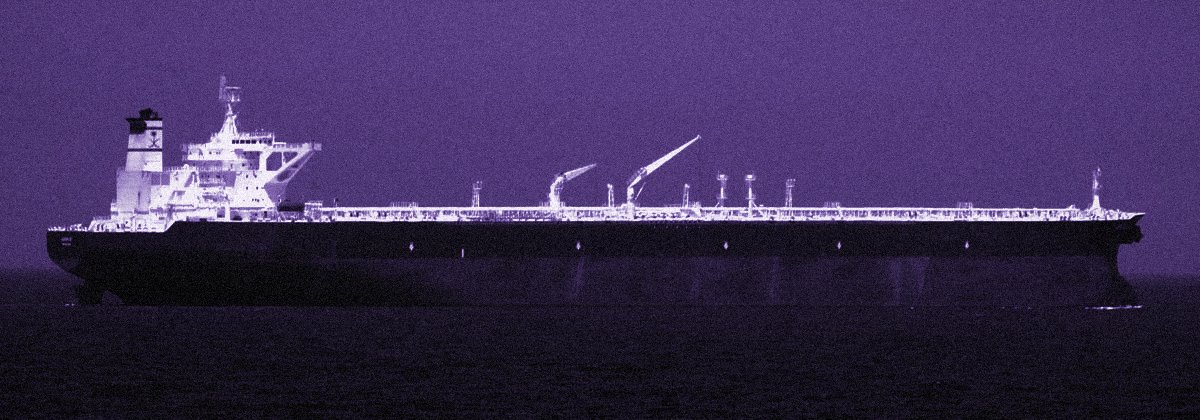
The plan Oman put in front of Tehran this week compresses five months of argument about the Strait of Hormuz into one adjective. Under the proposal, reported by Reuters on Tuesday, the strait would reopen under joint regional management rather than Iranian control, and passing ships would pay voluntary contributions toward navigation, safety and environmental services. Iran has demanded exclusive management of the waterway and mandatory fees for transit since the framework agreement in June. The Gulf's counteroffer keeps the revenue and deletes the compulsion. Everything that matters about the deal lives in that deletion.
The reported terms: a consortium of regional states would run the strait's traffic arrangements, with the fee model borrowed from the Strait of Malacca, where Indonesia, Malaysia and Singapore invite voluntary contributions from shipping to fund navigation aids, environmental protection and rescue services. A senior Iranian source said Tehran had yet to respond. Gulf foreign ministers held a video conference on what they called the freedom and safety of vessels, and Iran's foreign minister, Abbas Araghchi, took calls with Omani and Saudi officials on regional cooperation. Washington's position is that mandatory fees are illegal and that passage should return to pre-war terms. “I think we have a very strong position right now,” Trump said Monday, pairing the talks with a standing threat to resume strikes.
The Insurance Test
Whether ships return to the strait will be decided less by navies than by underwriters, and the voluntary wording is aimed at them. Last week the Lloyd's Market Association circulated a model clause allowing insurers to cancel war cover on discovering that a shipowner paid tolls for Hormuz transit, on the legal theory that mandatory payments to Iranian authorities collide with US, UK and EU sanctions. A voluntary contribution to a multi-state consortium is a different legal object. Shipping already pays into exactly this structure at Malacca without a sanctions question arising. The unresolved detail is the account. If the consortium holds the money and publishes what it buys, the payment resembles port dues. If Tehran holds the money, it resembles the thing the LMA clause was written to catch. The plan's plumbing, as much as its politics, will decide whether a reopened strait is insurable. An uninsurable reopening is not a reopening.
What the Gulf Is Buying
For Saudi Arabia the arithmetic runs through the pipeline. The East-West line has a ceiling near 7 million barrels a day, Yanbu has been fixing near capacity for weeks, and every barrel now travels with war premiums, longer routes and, since last week, the beginnings of outright exclusions from London underwriters. A reopened Hormuz restores Gulf loadings and retires most of that cost structure at once. The GCC's collective backing for the Omani paper prices this: contributing to a consortium that pays for safe passage costs less than the detour. The design also solves a face problem in both directions. Tehran can present a strait reopened with revenue attached and its role as a littoral state acknowledged. The Gulf can say control was never conceded, because a consortium answering to several capitals is not a concession to one.
The water is already responding to the diplomacy. Kpler counted 28 vessels through Bab el-Mandeb on Monday, a four-day high after Sunday's count of eleven, while Hormuz transits stayed in single digits against roughly 150 in a normal week of peace. Brent settled near 87 dollars on Tuesday, its lowest since 20 July, even as thermal satellites showed fires at a Saudi processing complex. Yesterday's split, paper pricing the diplomacy while the water priced the war, has begun to narrow from both ends.
The Precedent Problem
The plan's unpriced risk is pedagogical. Yemen's foreign minister-designate, Afrah Al-Zouba, said this week that the Houthis intend to replicate Iran's Hormuz strategy at Bab el-Mandeb, encouraged by what she described as an insufficient international response. A movement that declared a naval blockade of Saudi Arabia eight days ago is watching closure being converted into a negotiated revenue stream at the other strait. The counterargument is that Malacca has run its contribution scheme for decades without teaching anyone extortion, because the money follows services rather than rewarding threat. Which lesson travels will depend on what the Hormuz consortium is seen to be paying for: lighthouses, or quiet.
Tehran's answer will show whether revenue without control is enough, and Washington's whether it can accept an arrangement short of pre-war passage. The earlier signal will come from the trackers. If Hormuz transits climb out of single digits while the lawyers argue over the account, the adjective will have done its work.