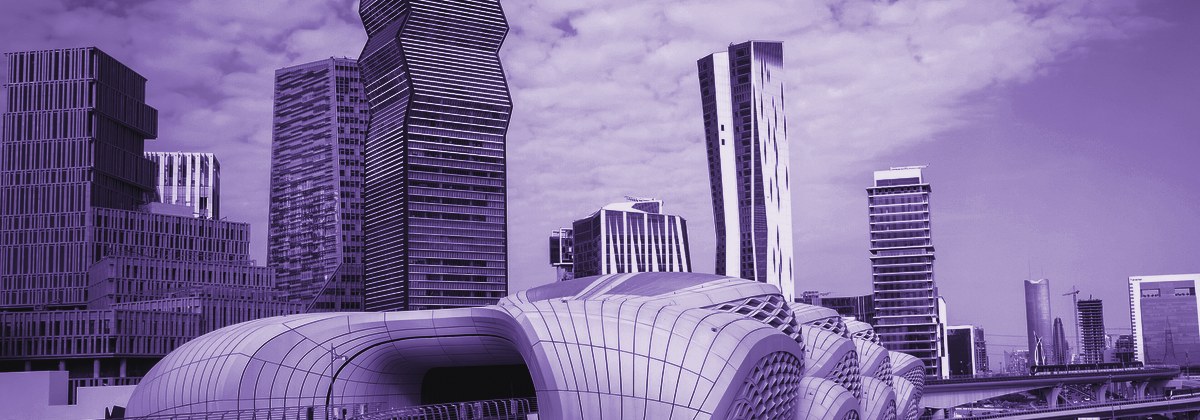
One year of metro service has changed what a train is in Saudi Arabia. The General Authority for Statistics counts 156.4 million rail passengers in 2025, an increase of 266.5 percent, in its Railway Transport Statistics bulletin reported Monday. Nearly all of that traffic never left a city: intracity ridership rose 368 percent to 145.4 million trips, from 31.1 million in 2024, while intercity travel fell 5.6 percent to 10.9 million. For most of its history, rail in the Kingdom carried pilgrims, travelers between cities and minerals to ports. The 2025 ledger describes a different machine, a daily utility that most of its users board inside Riyadh.
The mechanism is a single project. The Riyadh Metro opened in phases from December 1, 2024, a $22.5 billion system designed to carry up to 3.6 million passengers a day. The 2025 count is its first full calendar year, and the base effect explains the scale of the jump: a network that did not exist two Decembers ago now accounts for most of the Kingdom’s intracity rail trips. The design ceiling matters more than the growth rate. At 2025 volumes the system runs far below what it was built to carry, which is how transit networks are supposed to begin. Capacity bought ahead of demand is the point of building at that size.
The split between the urban and intercity numbers is the analytical story. The Haramain High Speed Railway accounted for 76 percent of the intercity count, and that count fell 6.1 percent on the year. Long-distance rail competes with highways and a dense domestic flight network; urban rail competes with congestion, and congestion in a city growing as fast as Riyadh is a rising price. One of those markets expands by construction. The national rail story is now a city story, and the intercity lines revert to what they have long been, a specialized service between the holy cities and a freight spine in the north.
Joseph Salem, a partner at Arthur D. Little, read the figures as evidence that investment in urban mobility is delivering, with the metro now carrying most of the Kingdom’s intracity trips. The more useful reading looks forward. The metro was financed as congestion relief and urban form, a Vision 2030 bet that Riyadh could keep growing without its roads taxing every working hour, and the first-year count is the earliest hard measure of adoption. Fare revenue was never the business case. Time recovered from traffic was, and 145 million trips is the first estimate of how much of it residents are willing to trade for.
Freight tells the other half. Volumes rose to 16.1 million tonnes from 15.6 million, with the North Train carrying 14.4 million tonnes, 89.7 percent of the total, almost all of it minerals moving toward processing plants and ports. A passenger business that more than tripled sits next to a freight business that grew about 3 percent, and the gap marks where the program goes next. The Saudi-UAE rail memorandum signed on October 8, the design work on the Kingdom’s section of the GCC railway and the June agreement with Turkiye all concern freight corridors first. The urban build proved the state can deliver rail at scale. The freight layer is where that capability earns in trade.
The first test of whether the urban number keeps compounding arrives this week. Riyadh Season opens on October 21, and the metro enters it with a full-year base to measure against rather than a novelty quarter. The quarterly prints through 2026 will show whether 145 million trips was the ceiling of curiosity or the floor of habit. The design capacity says the network was built for the second answer.