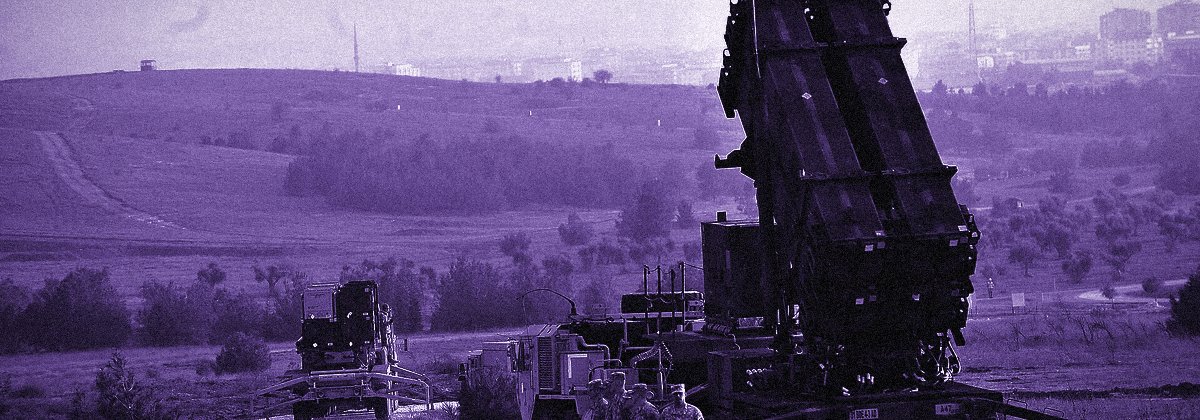
The air war reached the capital’s sirens this weekend, and the record of what followed is short. Civil Defense issued early warnings of a hostile aerial threat across Riyadh and nine other cities in the early hours of Saturday, then lifted them. Saudi air defenses intercepted a ballistic missile fired toward Riyadh on Saturday morning and destroyed it in the air. By Saturday evening the coalition had published its account: no casualties, no damage, and parallel attempts against four other cities thwarted the same day. For the more than eight million residents of Riyadh, the first alert of this escalation cycle ended the way every engagement further south has ended, with an all-clear.
The confirmed record comes from coalition spokesman Maj. Gen. Turki Al-Malki. The missile aimed at Riyadh “was destroyed in the air without causing damage,” he said, and air defenses thwarted attempts the same day against Taif, Bish, Farasan and Yanbu. The attacks, in his words, reflect “the militia’s intransigence and its persistence in deliberately and systematically targeting civilians.” The coalition’s leadership, he added, reserves the right to deterrent measures against the sources of the attacks, in accordance with international humanitarian law. Civil Defense alerts covered Riyadh, Al-Kharj, Jeddah, Taif, Yanbu, AlUla, Jazan, Farasan, Abha and Khamis Mushait before they were lifted.
The campaign has widened its map every week this month. On 8 September, missiles and drones struck four southern cities and wounded 73 people. A week later, attacks reached Khamis Mushait, Abha and Taif in a single night, injuring 13. On 15 September the coalition destroyed a drone south of Makkah. Two days after that, falling debris from an intercepted drone killed a resident of Taif, the first death of the cycle. A ballistic missile at Riyadh, roughly a thousand kilometers from the Yemeni frontier, extends the same line to the seat of government.
Militarily, the choice of target changes little. The interception record has held from Jazan to Taif, and it held over the capital. What a missile at Riyadh purchases is attention: sirens in the capital compel a response in a way that sirens in border cities, after months of war, no longer do. The instructive part of Saturday is which response the Kingdom chose. The procedure stayed identical to the southern playbook: warn, intercept, confirm the engagement, lift the alert. The Tadawul opened on schedule on Sunday and closed 0.26 percent lower at 10,749 on turnover of SR2.6 billion, a session within the range of ordinary weeks. The message embedded in that routine is that the capital is defended like any other Saudi city, and inconvenienced like one.
The Houthi spokesman claimed strikes on what he called sensitive sites in Riyadh and on an energy facility in Yanbu. The official record contradicts both claims: the coalition listed Yanbu among the cities where attempts were thwarted, and as of Sunday evening no Saudi authority had reported damage or casualties from any of the day’s engagements.
The diplomatic ledger moved faster than usual. The UN Security Council condemned the campaign against Saudi cities on Friday and affirmed the Kingdom’s right to defend itself. Within a day of the Riyadh interception, condemnations arrived from Kuwait, Egypt, Bahrain, Jordan and Lebanon, from the Gulf Cooperation Council’s secretary-general and from the UN secretary-general. For Riyadh the sequence has practical value: the reserved right to deterrent measures now sits on an explicit Security Council endorsement of self-defense, more diplomatic room than the Kingdom has held at any earlier point in the cycle.
Two files stay open behind the day’s statements. The Energy Ministry has yet to publish a restoration statement for the East-West pipeline, shut as a precaution after the 11 September attack; the progress reports that have circulated since remain unofficial. And the alert system itself, the issue-then-lift cycle Civil Defense has run for southern cities since the summer, has now been exercised at national scale, ten cities in one night.
What to watch is the shape the reserved deterrent measures take, and whether the capital’s alert stays a single event or becomes a cadence. The defense the Kingdom built for its southern cities has now run once, at full scale, at its center. The next question is whether it has to run there again.