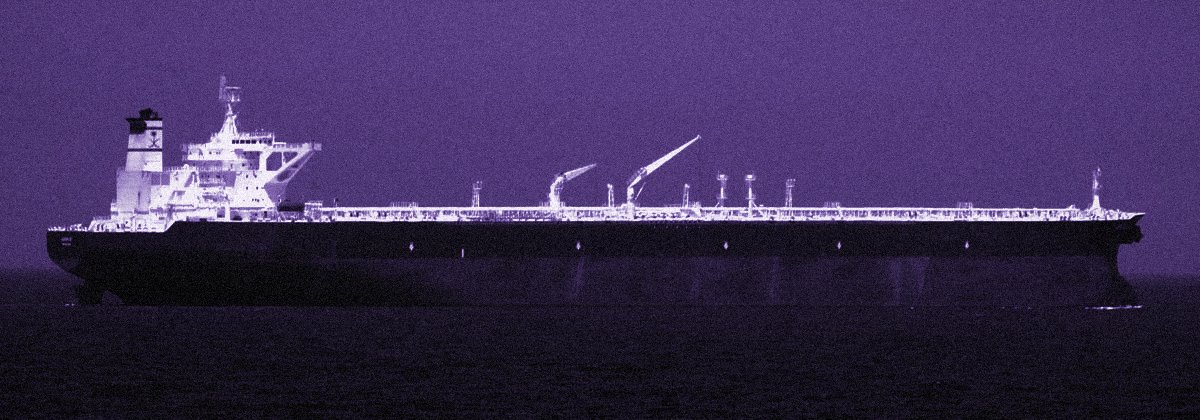
The photograph from Thursday's meeting in Riyadh holds more information than the communique. Chiefs of staff and senior officers from 43 countries, with a European Union delegation alongside, sat in a room convened by the Saudi Ministry of Defense to discuss the security of three bodies of water. By evening, fourteen of those states had signed a joint statement founding a Multinational Maritime Defense Coalition, with the Kingdom as founding nation and permanent host of its headquarters. After six months of watching its shipping repriced, excluded and attacked, Saudi Arabia has stopped lobbying inside other countries' security constructs and built one it chairs.
The confirmed record: the coalition's stated scope is the Bab al-Mandab Strait, the Red Sea and the Gulf of Aden. The founding states are Saudi Arabia, Kuwait, Bahrain, Qatar, Pakistan, Turkey, Egypt, Jordan, Yemen, Bangladesh, Nigeria, Sudan, Djibouti and Somalia. The joint statement describes the grouping as purely defensive, targeting no state or organization, operating within international law. Participants reviewed a draft charter, organizational structure and command arrangements; the launch follows charter finalization and each state's national procedures. Fifty-one countries and organizations were invited.
Read the membership as a map. Egypt holds Suez, whose transit revenues depend on the corridor the coalition would patrol. Djibouti, Somalia and Sudan are the western shore of the contested water. Yemen's government signing is a political fact in itself, given that the declared threat to that water is the Houthi blockade announced against the Kingdom on 20 July. Pakistan and Turkey bring two of the largest navies in the Muslim world, and Bangladesh a long record of contributing sailors to multinational operations. What the list lacks is equally deliberate: no Western flag among the founders, though 43 delegations heard the pitch. This is a coalition of the coastline rather than a coalition of the West, which distinguishes it from every maritime construct assembled in these waters in the past decade.
The Geography of the Mandate
The scope stops at the Gulf of Aden. Hormuz, the war's other chokepoint, is not in the founding documents, and that boundary tracks the structure Riyadh has built into its entire war policy. The Houthi file is handled by the Kingdom directly, by negotiation and now by institution. The strait where Iran sits is left to the powers already massed there. A week ago Tehran rejected Oman's Gulf-backed plan for reopening Hormuz under joint management; Riyadh has responded by organizing the water it can lead, not the water it cannot.
The defensive framing does the same work in a second register. A coalition that targets no one keeps the Kingdom's negotiation with the Houthis alive, and it gives underwriters something no communique has yet offered: governance. Lloyd's market insurers spent July moving from pricing Saudi voyages to excluding them, with war-risk premiums off Jizan reaching 3 percent of hull value. Premiums respond to structure as much as to incidents. A standing headquarters, a charter and fourteen committed flags amount to an argument addressed to London as much as to Sanaa.
The Air and the Sea
The limits of the instrument were visible within a day. On Friday, Revolutionary Guard drones struck Ahmad al-Jaber air base in Kuwait and Sheikh Isa air base in Bahrain, retaliation, Tehran said, for the heaviest American strikes on Iran of the war. Kuwait and Bahrain are both founding members of the new coalition; the attacks they absorbed came by air, in a lane no maritime charter covers. Brent moved back above 90 dollars a barrel Friday morning. The coalition is built for the threat that squeezes Yanbu's loadings and Jizan's repairs, not for the one that arrives over the horizon at Mach speed.
What to watch is ratification tempo. Fourteen signatures in one day is announcement speed; charters move at parliament speed, and the gap between the two will show which capitals meant it. Watch too whether the remaining 29 delegations convert, whether the coalition acquires escort and convoy functions or stays at information-sharing, and whether the first hull re-marked by a Lloyd's syndicate cites it. Institutions in this region are usually judged by their summits. This one will be judged by a number: the war-risk premium on a Saudi port call.